
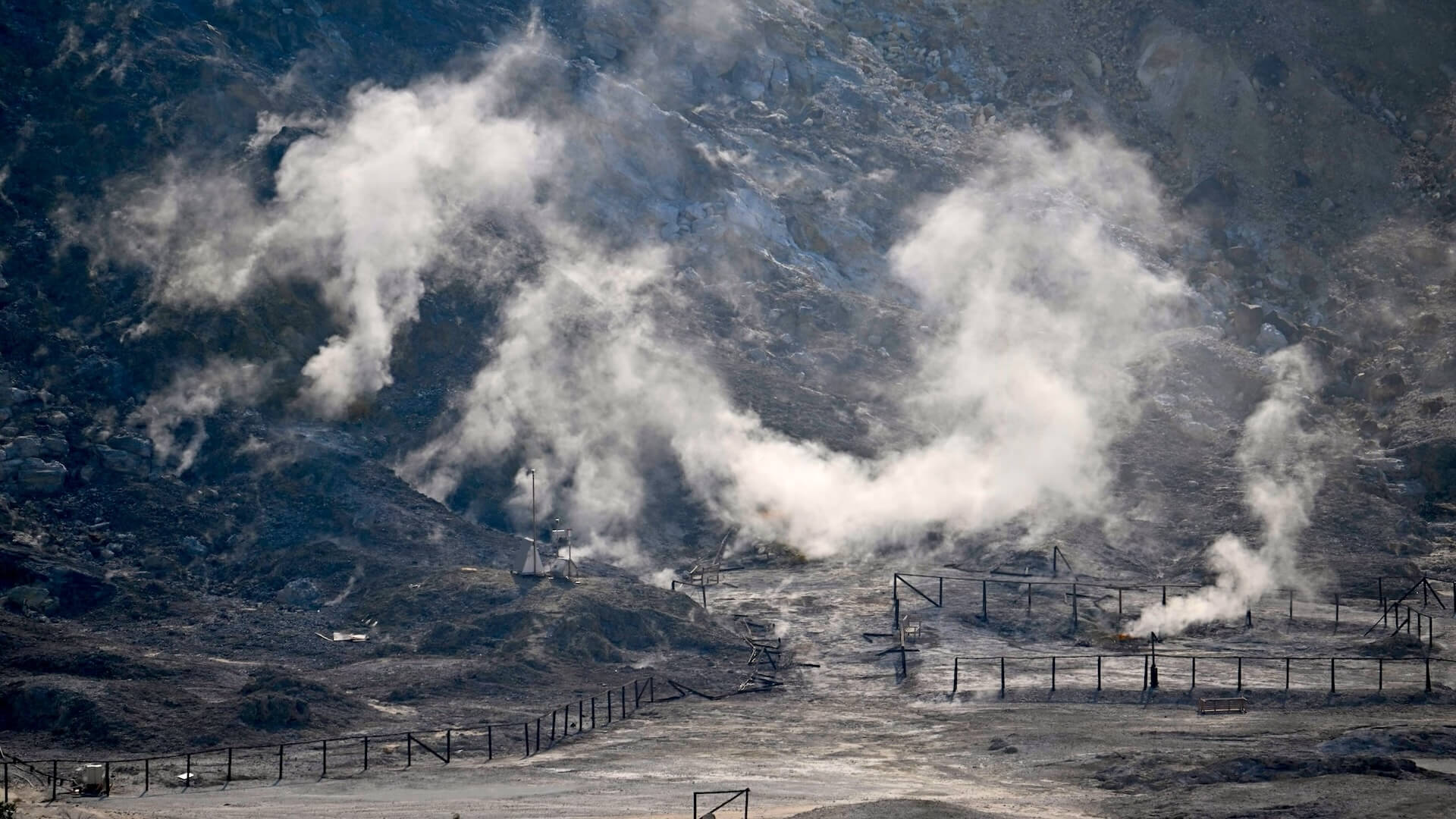
Europe Has Its Own Yellowstone – And It’s Waking Up Right Now
Beneath Naples, scientists have uncovered troubling signs from a vast volcanic system that could pose a growing threat to hundreds of thousands nearby

Half a million people live above a volcano they cannot see.
Beneath Naples, the ground hides one of Europe’s most dangerous volcanic systems.
For decades, scientists believed they were gradually piecing together how it worked.
Then the evidence changed.
Deep underground, something is moving.
The discovery does not mean an eruption is imminent.
But it has forced scientists to look again at one of Europe’s most closely watched volcanic regions.
And the question is becoming harder to ignore.
How close could this system be to its breaking point?
The Hidden Volcano Beneath Naples Is Stirring

The danger begins beneath the ground.
Campi Flegrei is not a classic cone-shaped volcano rising above the landscape.
America’s Most Dangerous Volcano Is Shaking Like Never Before
Instead, it is a sprawling volcanic caldera stretching across the area west of Naples.
Much of it is hidden beneath towns, roads, and the Mediterranean coastline.
That makes the threat unusually difficult to see.
For years, scientists have monitored earthquakes, ground deformation, and volcanic gases across the region.
Meanwhile, the ground itself has repeatedly risen and fallen.
This phenomenon, known as bradyseism, has shaped the history of the area.
When underground pressure changes, the surface can move.
As a result, buildings and roads can rise or sink over time.
The process can also produce earthquake swarms.
Yet earthquakes do not automatically mean magma is about to erupt.
Instead, they can reveal how fluids and pressure are moving through the volcanic system.
That distinction matters.
Because Campi Flegrei volcano is not simply sitting quietly beneath Naples.
It is an active system that scientists are constantly watching.
And its most important clues may be hidden far below the surface.
What Scientists Found Beneath Europe’s Volcano
The deeper scientists look, the more complicated the picture becomes.
Researchers have been investigating how magma, heat, and fluids move beneath the caldera.
The goal is not simply to predict an eruption.
It is to understand what happens before the volcano reaches that point.
That is especially important because Campi Flegrei eruption scenarios could affect a densely populated region.
The area has experienced enormous eruptions in the distant past.
One of the most significant occurred around 39,000 years ago.
That event produced vast deposits across the region and had consequences far beyond the immediate volcanic landscape.
However, ancient eruptions do not tell scientists exactly what the volcano will do next.
Every volcanic system behaves differently.
And modern monitoring provides a much more useful warning system.
Scientists track ground movement.
They measure earthquakes.
They monitor gases escaping from the ground.
They also study changes in temperature and the chemistry of volcanic fluids.
Together, these signals can reveal whether pressure is building beneath the caldera.
That does not provide a countdown clock.
Instead, it provides a constantly changing picture of the volcano’s condition.
And that is why comparisons with Yellowstone can be misleading.
Both are enormous volcanic systems.
But their geology, history, and behaviour are different.
Calling Campi Flegrei a supervolcano captures its enormous eruptive potential—but it does not mean a massive eruption is inevitable.
The real danger is uncertainty.
Scientists know the system is active.
They know it has produced enormous eruptions before.
But they cannot yet say exactly when its next major event will occur.
Final Verdict: How Close Is Campi Flegrei?
So, is Campi Flegrei about to erupt?
There is no evidence that allows scientists to give a reliable countdown.
That is the crucial point.
An active volcanic system can produce earthquakes, ground deformation, and increased gas activity without immediately progressing to an eruption.
Nevertheless, the danger cannot be dismissed.
Hundreds of thousands of people live directly above or around the caldera.
That makes even a relatively small eruption a major emergency.
A larger event would be far more serious.
The greatest challenge is therefore not simply predicting an eruption.
It is preparing for a volcano whose most dangerous machinery remains hidden underground.
For the people of Naples, that invisible threat is part of everyday life.
The ground can move.
Earthquakes can return.
Gas can rise.
And scientists will continue watching every signal for evidence that the system is changing again.
For now, there is no scientific basis for saying that a Campi Flegrei eruption is imminent.
But there is equally no reason to stop watching.
Because beneath one of Europe’s busiest cities lies a volcanic system with a history powerful enough to reshape the region.
And the next major clue may come from somewhere no one can see.
 Watch the Video
Could Campi Flegrei really erupt again—and what would happen to the hundreds of thousands of people living above Europe’s restless volcanic system?