

America’s Most Dangerous Volcano Is Shaking Like Never Before
A dangerous American volcano is showing unusual signs of unrest, raising fears that a long-dormant giant could be moving towards eruption

Mount Rainier is moving.
Not erupting.
Moving.
In the summer of 2025, more than 1,300 earthquakes rattled the volcano in what became the largest earthquake swarm ever recorded there.
For a mountain carrying enormous quantities of glacier ice above densely populated communities, that number sounds terrifying.
But the real story is more complicated.
Scientists watched the swarm closely using GPS measurements, infrasound sensors, webcams, and even helicopter surveys around the summit crater.
What they found did not point towards magma forcing its way upward.
Instead, the evidence pointed towards fluids moving through the volcano’s hydrothermal system.
That distinction could mean the difference between a warning sign and a geological false alarm.
Yet Mount Rainier remains one of America’s most dangerous volcanic threats.
And the reason has less to do with lava than most people realise.
The Earthquake Swarm That Shook Mount Rainier
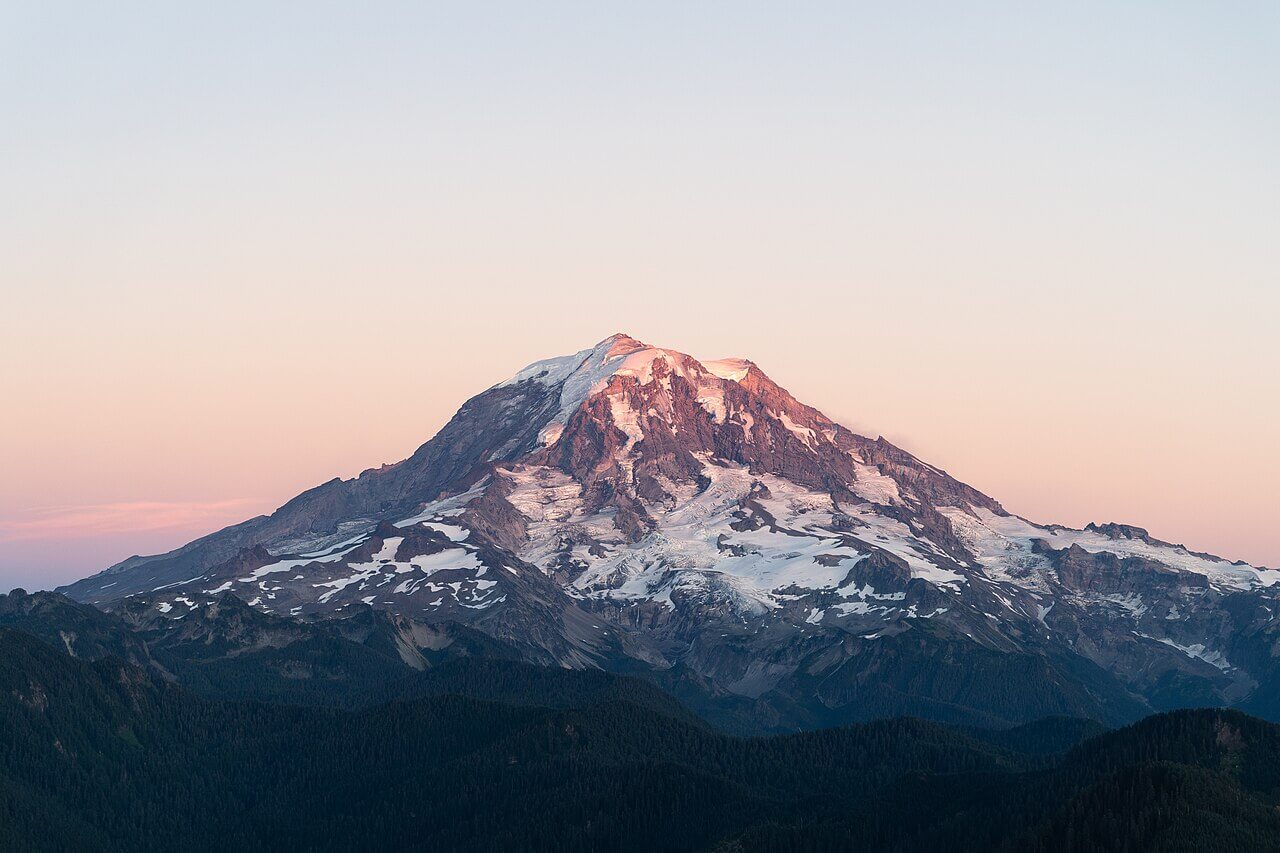
The 2025 earthquake swarm immediately attracted attention.
76 Fake Beaver Dams Were Placed in a Dying River — What the Beavers Did Next Is Incredible
More than 1,300 small earthquakes were detected beneath Mount Rainier during the summer.
For volcanologists, swarms like this matter because earthquakes can sometimes accompany magma movement.
But earthquakes do not automatically mean an eruption is coming.
Scientists looked for other evidence.
GPS instruments would have detected significant ground deformation if large volumes of magma were pushing towards the surface.
They did not find the deformation expected from a major magma intrusion.
Infrasound sensors and webcams also failed to show the kind of surface changes that would suggest an imminent eruption.
A helicopter gas survey added another important piece of evidence.
The summit crater did not reveal a pattern consistent with rapidly rising magma.
Instead, researchers focused on movement within the volcano’s hydrothermal system.
Hot fluids can travel through fractures and altered rock deep inside a volcano.
That movement can generate earthquakes without triggering an eruption.
In other words, the mountain was shaking—but the evidence did not show that it was waking up for an eruption.
That distinction is crucial.
Why Ice Could Make Rainier So Dangerous
The greatest threat from Mount Rainier volcano may not be lava at all.
It may be water.
Rainier holds an enormous volume of glacier ice.
That ice sits above steep slopes and weakened volcanic rock.
If part of the mountain collapses or volcanic heat rapidly melts snow and ice, enormous mixtures of water, rock, mud, and debris can race downhill.
These destructive flows are called a lahar.
And they can travel astonishing distances.
Rainier’s past includes enormous lahars that swept through valleys long before modern cities existed.
The Osceola Mudflow, for example, transformed huge areas of the surrounding landscape.
Today, communities including Orting, Puyallup, Sumner, and Fife occupy areas affected by ancient lahar deposits.
That creates a frightening problem.
A future Mount Rainier eruption would not necessarily need to send lava into a city to cause catastrophe.
A rapidly moving lahar could travel down river valleys towards populated areas.
This is why emergency planners take Rainier so seriously.
The region’s lahar detection and warning system was first established in 1998 and is now undergoing major modernisation.
The goal is simple.
Detect a dangerous flow.
Warn communities.
Give people enough time to escape.
That warning window could save thousands of lives.
And with major evacuation drills planned across the region, officials are treating the danger as a question of preparedness—not prediction.
Final Verdict: Is Mount Rainier About to Erupt?
There is no evidence that Mount Rainier is currently on the verge of an eruption simply because of the 2025 earthquake swarm.
The seismic activity was extraordinary.
But the other monitoring systems did not show the combination of signals scientists would expect from rising magma.
That makes hydrothermal fluid movement a much more likely explanation.
Still, that does not make the mountain harmless.
Rainier remains an active volcano surrounded by communities built across the paths of ancient lahars.
Its danger comes from the combination of ice, steep terrain, unstable volcanic rock, and a densely populated region below.
That is why comparisons with Kilauea, Mount St. Helens, and even Vesuvius can be misleading.
Every volcano has its own threat profile.
Rainier’s most terrifying scenario does not necessarily begin with a spectacular lava fountain.
It could begin with a collapse.
Then water.
Then a wall of mud and rock racing through valleys that are home to tens of thousands of people.
The 2025 earthquake swarm therefore deserves attention—but not panic.
Scientists are watching the mountain precisely because they know how quickly volcanic systems can change.
And for communities beneath Rainier, preparation may ultimately matter far more than trying to predict the exact day the mountain will erupt.
 Watch the Video
Could Mount Rainier’s greatest danger be hiding not in a dramatic eruption, but in the glaciers, weakened rock, and ancient lahar pathways surrounding the volcano?