

76 Fake Beaver Dams Were Placed in a Dying River — What the Beavers Did Next Is Incredible
Researchers install 76 artificial beaver dam structures in a degraded Oregon river, leading to unexpected ecological changes as local beaver activity begins reshaping the landscape

What happens when a dying river is not repaired—but restarted?
In 2009, researchers working in the Oregon high desert carried out an unusual ecological experiment. Rather than directly restoring a damaged river, they installed seventy-six artificial beaver dams designed to imitate nature itself.
Importantly, the goal was not to control the ecosystem.
Instead, it was to test whether nature would take over if the right conditions were recreated.
What followed over the next four years surprised even the scientists who designed the experiment.
At the end of this article, you can watch a video showing how this project unfolded and what the river became over time.
However, a deeper question remains:
Can an ecosystem heal itself if humans only recreate the conditions it once had?
A River on the Brink of Ecological Collapse
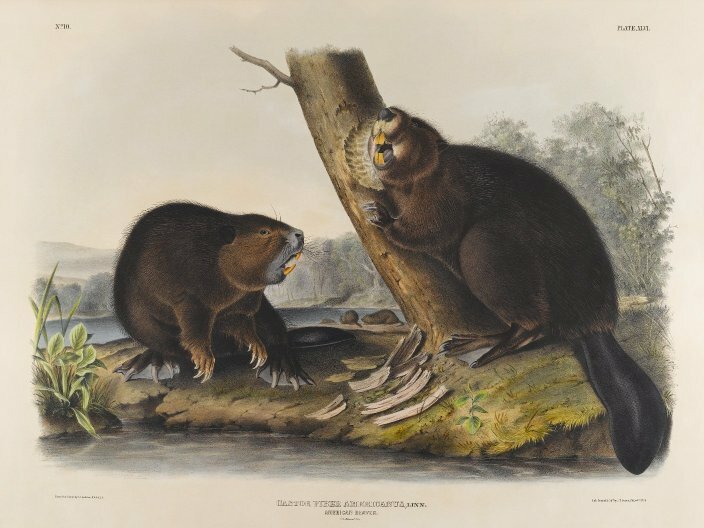
Before intervention, the river had already collapsed into an unstable state.
Over time, years of erosion carved it into a deep, narrow channel that no longer behaved like a healthy river system. As a result, water moved too quickly, banks collapsed easily, and surrounding wetlands began to disappear.
Meanwhile, as the river cut deeper into its own bed, groundwater levels dropped.
Billions of Oysters Were Released into Chesapeake Bay — And the Ecosystem Came Back to Life
Consequently, temperatures rose.
Eventually, the system stopped supporting the life it once held.
Although beavers were still present, they were losing the battle.
Without stable structures to slow the flow of water, their natural engineering instincts could no longer reshape the environment at scale.
Scientists identified a critical insight:
The problem was not the absence of beavers—it was the absence of conditions that allowed beavers to function.
The Experiment
Instead of rebuilding the river through heavy engineering, researchers chose a different approach.
They installed seventy-six artificial dam structures using wooden posts and natural debris, spacing them along key sections of the river.
However, these were not traditional dams.
Rather, they were designed as ecological triggers.
The idea was simple but radical: slow the water just enough for nature to take over.
By reducing flow speed, trapping sediment, and increasing water retention, the structures aimed to recreate the environment that beavers naturally prefer.
At the same time, the goal was not permanence.
Instead, it was activation—a system designed to restart itself.
What Happened When Nature Slowly Reclaimed the River
Once the structures were in place, researchers stepped back and observed carefully.
Almost immediately, beavers already living in the system began interacting with the artificial dams.
Rather than ignoring them, they modified them.
In fact, they reinforced the structures with branches, mud, and vegetation, while also expanding weak points and rebuilding sections entirely.
Over time, the human-made structures stopped being the main feature.
Instead, the beavers became the engineers.
What began as a controlled experiment gradually turned into a self-organising ecological system.
As a result, water slowed, pools formed, and for the first time in years, the river began to spread outward again instead of cutting downward.
Four Years of Transformation
The most dramatic changes did not happen instantly—they accumulated gradually over time.
As the beavers continued working, the landscape steadily shifted.
- Water levels stabilised across multiple sections
- Sediment naturally rebuilt riverbanks
- Vegetation returned to previously dry zones
- Small wetland ecosystems reappeared
- Fish and aquatic species returned to recovering habitats
Importantly, the results were not just improvements—they were sustained.
The system did not revert back to collapse.
Instead, it continued to evolve.
Unlike traditional engineering projects, maintenance was carried out entirely by wildlife.
The Scientific Shock: Nature as an Active Engineer
This experiment challenged a long-standing assumption in environmental science.
Traditionally, rivers are treated as systems that must be engineered, controlled, or fixed.
However, this project suggested something different.
Instead of forcing stability onto the environment, scientists created conditions where stability could emerge naturally.
Beavers were not passive participants in this process.
Rather, they acted as ecosystem engineers—biological agents capable of reshaping entire landscapes through repeated, small-scale actions.
When the environment supported that behaviour, the entire system reorganised itself.
Why This Approach Matters (and Its Limits)
Despite its success, scientists do not view this method as a universal solution.
On the one hand, river systems vary widely. Geography, climate, and human activity all influence whether similar interventions would work elsewhere.
On the other hand, in some environments, artificial structures could fail to integrate with natural behaviour or even disrupt existing water flow patterns.
Additionally, there is a scaling question.
What works in a remote ecological system may not translate directly to heavily urbanised or industrial rivers.
Still, the experiment has become widely studied because it shifts how restoration is understood.
Instead of replacing ecosystems, it suggests restarting them.
A Different Way of Thinking about Restoration
Ultimately, the most important outcome of the experiment may not be physical change—but conceptual change.
It challenges a simple assumption:
That broken ecosystems must be rebuilt by humans.
Instead, it suggests another possibility:
That ecosystems may already know how to rebuild themselves—if the right conditions return.
In this view, human intervention is not about control.
Rather, it is about guidance.
Not forcing nature into shape, but removing the barriers that prevent it from functioning.
Final Thoughts
The story of seventy-six artificial beaver dams is not just an environmental experiment.
It is a shift in perspective.
A dying river did not need to be replaced.
Instead, it needed conditions that allowed life to reorganise itself again.
Beavers did the rest.
And perhaps the most surprising lesson is this:
Sometimes the most powerful engineering system on Earth is not built by humans at all.
It is built by nature—when we stop getting in its way.
 Watch the Video
What if the most powerful form of environmental restoration is not building new systems—but simply recreating the conditions that allow nature to rebuild itself?