
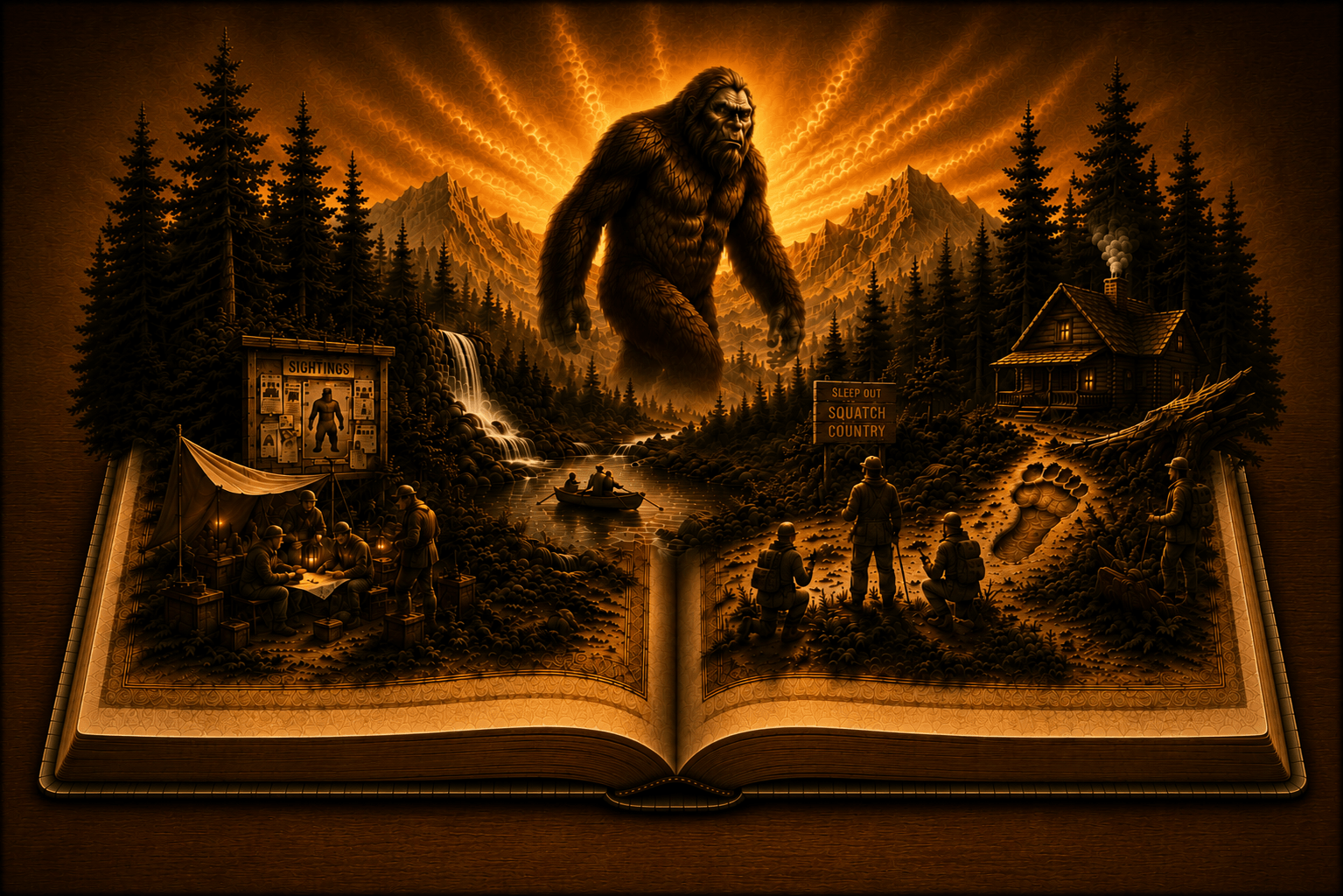
Grok AI Analysed the 1967 Patterson-Gimlin Bigfoot Film — Here’s What It Found
For decades, one grainy film has divided the world. Now Grok AI has re-examined the legendary Bigfoot footage, searching for clues that humans may have missed

For nearly sixty years…
A few seconds of film have fuelled one of the greatest mysteries in modern history.
Filmed in the forests of Northern California in 1967, the Patterson-Gimlin film appears to show a large, human-like creature walking across a remote creek bed before briefly turning toward the camera.
To believers…
It is the strongest evidence Bigfoot has ever existed.
To sceptics…
It is one of the most successful hoaxes ever recorded.
Yet despite decades of investigation, one question refuses to disappear.
What exactly is seen in the footage?
Now…
A new investigator has entered the debate.
Not a scientist.
Not a tracker.
Not a witness.
Artificial intelligence.
Using modern image analysis, pattern recognition, motion assessment and visual interpretation, Grok AI analysed one of the most controversial films ever recorded.
Consequently, the results have reignited a mystery that many believed would never be solved.
By the end of this article, you’ll discover what Grok AI observed, how its conclusions compare with decades of expert analysis, and why the Patterson-Gimlin film continues to divide opinion nearly six decades after it was recorded.
The Footage That Started a Global Mystery
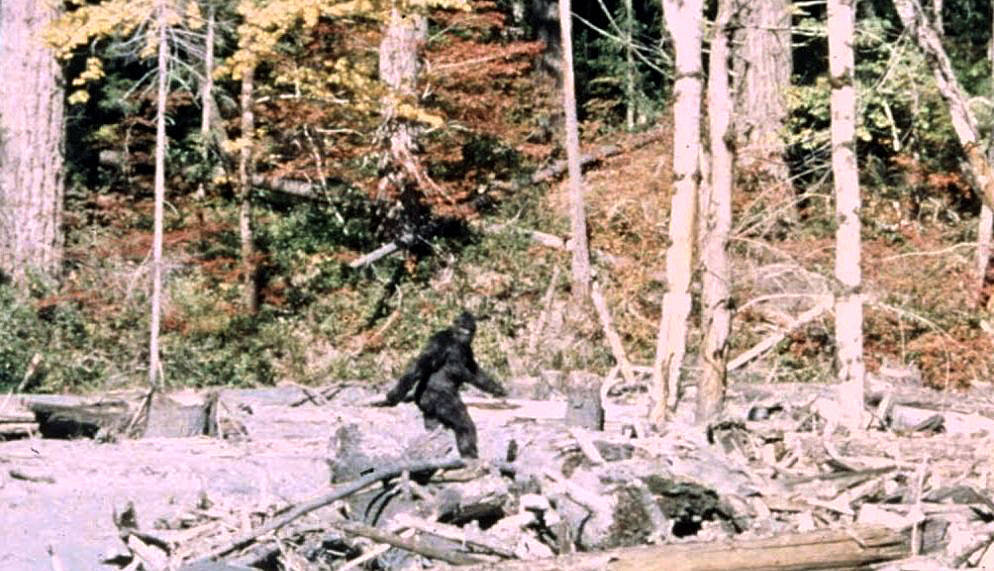
On October 20, 1967…
Roger Patterson and Bob Gimlin were riding through Bluff Creek in Northern California when they claimed to encounter an enormous unknown creature.
Duane Ollinger Uncovers What’s Hidden Beneath Blind Frog Ranch — And It’s Shocking
Patterson quickly grabbed his camera.
What followed lasted less than a minute.
Nevertheless, those few seconds would become legendary.
The film appeared to show a large, muscular figure covered in dark hair moving across the landscape with a distinctive stride.
Then came the moment that changed everything.
The creature briefly turned its head toward the camera.
For supporters of Bigfoot’s existence, that single movement made the footage feel authentic.
However, for critics, it became another detail to scrutinise.
Over the decades, the film was analysed by wildlife experts, anthropologists, special-effects artists, biomechanists and countless independent researchers.
Some argued the proportions appeared unusual for a person wearing a costume.
Others insisted a determined hoaxer could have achieved the same result.
As a result, the debate never ended.
If anything…
It only grew larger.
Could Grok AI Have Found the Missing Clue?
Unlike human investigators, Grok AI approached the footage without personal beliefs.
It did not begin as a believer.
Nor as a sceptic.
Instead, it simply examined patterns visible within the film.
According to analyses generated through AI interpretation, several features repeatedly attract attention.
These include the apparent arm length.
The movement of the shoulders.
The walking gait.
The proportions between the torso and legs.
Supporters argue that some of these characteristics appear unusual when compared with an average human subject.
In particular, attention is often given to the creature’s stride and the way its limbs appear to move throughout the sequence.
At the same time…
AI analysis faces the same limitations that have challenged researchers for decades.
The original footage is short.
Moreover, image quality is limited.
As a result, important details remain difficult to verify.
Artificial intelligence can analyse patterns within the available frames, but it cannot create information that was never captured by the camera.
Therefore, AI interpretations remain part of a much larger investigation rather than a final answer.
Some researchers view the observations as intriguing.
Meanwhile, others argue they remain entirely consistent with a person in a costume.
Consequently, the mystery continues because the same evidence still supports multiple interpretations.
Nearly sixty years later…
The film remains as controversial as ever.
Final Verdict: What If the Truth Was There All Along
Perhaps that is why the Patterson-Gimlin film refuses to disappear.
Most mysteries fade with time.
However, this one continues attracting new investigators, new technology and new generations of viewers.
Grok AI has not proven that Bigfoot exists.
Nor has it proven the film is a hoax.
Instead, it has placed a modern analytical tool into a debate that began long before artificial intelligence existed.
And despite all the advances in technology…
The central question remains remarkably unchanged.
What exactly did Patterson’s camera capture that day in 1967?
Was it an unknown creature?
A remarkably convincing costume?
Or something that continues to escape explanation?
Perhaps the most fascinating possibility is also the simplest.
What if the truth has been sitting within those frames all along…
Waiting for someone—or something—to finally recognise it?
 Watch the Video
Do you believe the Patterson–Gimlin film captured a real unknown creature, or do you think it was one of the greatest hoaxes ever recorded?