

Anunnaki: The Untold Story | The Full Movie
Ancient Mesopotamian texts describe mysterious beings who descended from the heavens. The Anunnaki story has since become one of history's most enduring mysteries

What if one of humanity’s oldest stories has been misunderstood for thousands of years?
Deep beneath the sands of ancient Mesopotamia, scribes recorded powerful beings who supposedly shaped the world of gods and humans.
They called them the Anunnaki.
The tablets are real.
So is the civilisation that created them.
Yet the modern story surrounding these mysterious beings is something entirely different.
Some believe the Anunnaki were simply gods worshipped by ancient Mesopotamians.
Others claim they were visitors from another world.
Meanwhile, some theories go even further, suggesting they influenced human civilisation itself.
It is a story that moves from ancient temples to extraterrestrial speculation—and the further it travels, the stranger it becomes.
But where did the alien interpretation actually begin?
More importantly, what do the original sources really say?
The full movie explores that journey, from the ancient tablets to the modern theories surrounding the Anunnaki. The documentary appears at the end of the article for viewers who want to take the investigation further.
The Ancient Gods Behind the Anunnaki Mystery
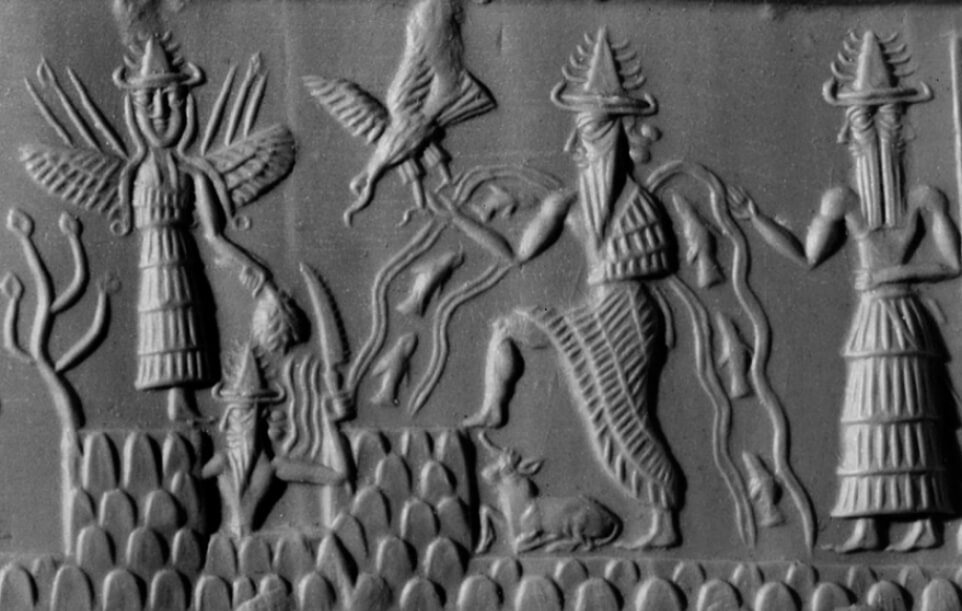
The Anunnaki appear in ancient Mesopotamian religious traditions.
Anunnaki Artefacts That NASA Is Hiding (Video)
However, their story is not contained in one single book.
Instead, it developed across centuries.
Sumerian, Akkadian and Babylonian sources describe a complex world of gods, kings and supernatural forces. Within that world, the Anunnaki occupied different roles depending on the period and text.
Their exact identity could change.
That distinction matters because ancient Mesopotamia was constantly evolving, with different cities developing their own religious traditions and interpretations.
Within this much larger pantheon, the Anunnaki were associated with powerful divine figures such as Anu, Enlil and Enki.
At the same time, the stories surrounding these beings explored enormous questions about existence.
Why did humans exist?
Who controlled the natural world?
Why did suffering exist?
And what happened after death?
Taken together, the surviving tablets provide a remarkable window into one of humanity’s earliest urban civilisations.
Yet they do not provide straightforward evidence of extraterrestrial visitors.
That interpretation came much later.
How Did the Anunnaki Become an Alien Theory?
The alien interpretation emerged in the modern era.
One of its most influential advocates was Zecharia Sitchin, who argued that ancient Mesopotamian texts contained evidence of extraterrestrial beings connected with a planet he called Nibiru.
However, mainstream Assyriologists strongly reject those interpretations.
According to their analysis, Sitchin’s translations do not accurately represent the original Mesopotamian texts.
Even so, the theory spread widely.
Over time, it became enormously popular through books, documentaries, television programmes and online investigations.
The modern version of the story often claims that the Anunnaki:
- Arrived on Earth in the distant past
- Possessed advanced technology
- Influenced early human civilisation
- Played a role in human origins
- Became the gods remembered in ancient mythology
Suddenly, an ancient religious tradition had become something else.
A possible extraterrestrial history.
Yet popularity is not evidence.
There is no accepted archaeological discovery proving that the Anunnaki were extraterrestrial beings.
Likewise, there is no established scientific evidence showing that Nibiru was an inhabited planet that once passed close to Earth.
As a result, the central claim remains unverified.
Nevertheless, the theory continues to fascinate people because it asks an enormous question: what if some ancient stories preserve memories of something humanity has misunderstood?
For now, that possibility remains speculation.
Final Verdict: What the Anunnaki Really Represent
The Anunnaki are real.
So are the ancient texts that mention them.
The civilisations that produced those records are real as well.
However, the extraterrestrial interpretation is not established fact.
That distinction is crucial.
At the same time, it does not make the genuine ancient story any less fascinating.
Mesopotamian scribes preserved some of humanity’s earliest surviving literature.
Their records describe gods, kings, creation and death.
Those fragile tablets survived for thousands of years.
Today, we read them through completely different eyes.
To an ancient Mesopotamian, the Anunnaki belonged to a sacred universe.
By contrast, some modern theorists see them as possible visitors from another world.
That difference reveals something fascinating about how history is interpreted.
Every generation views the ancient past through the ideas of its own time.
Today, that can turn ancient gods into aliens.
Perhaps future discoveries will change the picture again.
Until then, the Anunnaki remain suspended between documented mythology and modern speculation.
And that may be why their story refuses to disappear.
The gods belong to the ancient world.
The mystery belongs to ours.
 Watch the Video
If the Anunnaki were not gods but visitors from another world, what evidence would you expect to find?