

3I/ATLAS Just Sent Back a Strange Signal — Scientists Had to Investigate
A strange signal from 3I/ATLAS has triggered a closer investigation, as scientists study the rare interstellar visitor for clues from another star system

Something unusual came from another star.
It crossed the Solar System.
And now, as 3I/ATLAS continues its journey through deep space, scientists are still trying to understand everything it revealed.
The object was already extraordinary simply because it came from beyond our Solar System.
But then the observations started piling up.
Its chemistry looked unusual.
Its activity raised questions.
Its jets and coma showed unexpected structures.
And some researchers began publicly pointing to a growing list of anomalies.
That does not mean an alien spacecraft has been discovered.
In fact, SETI observations found no evidence of technological radio signals, while NASA and other researchers continue to describe the object as a natural interstellar comet.
Still, the mystery has not disappeared.
Because the more scientists examine 3I/ATLAS, the more complicated the story becomes.
The Anomalies Making Scientists Look Twice
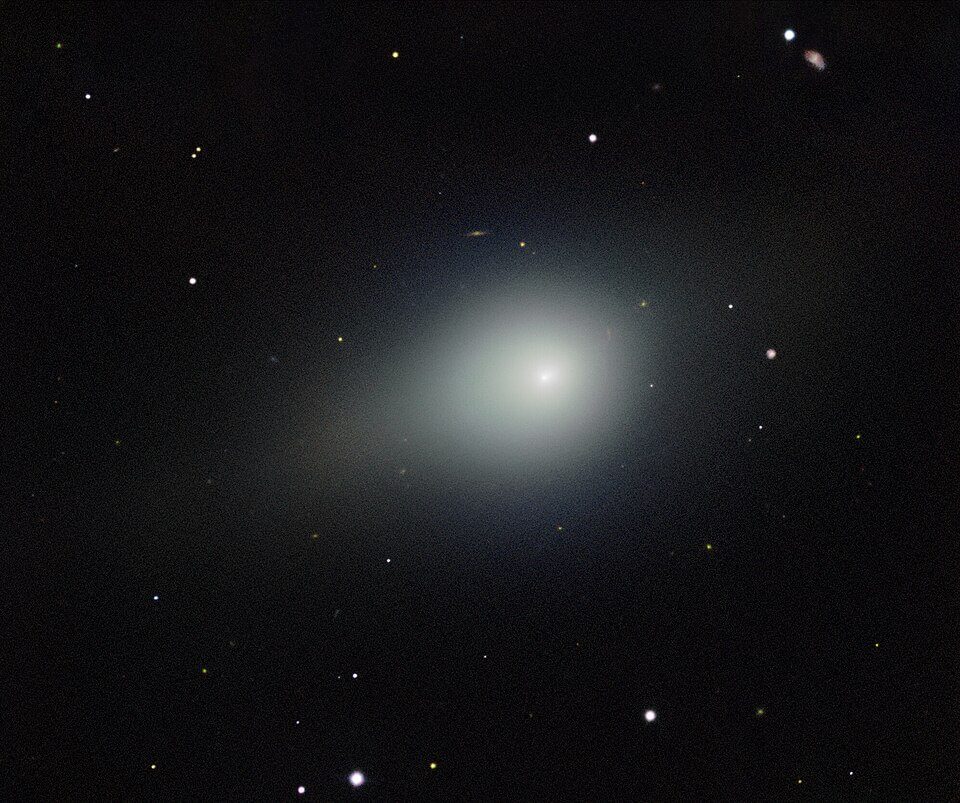
The first mystery was its origin.
What Edward Snowden Just Said About UFO’s Is TERRIFYING And Should Concern All of Us
3I/ATLAS did not come from the Solar System.
Its trajectory showed that it was travelling through our neighbourhood on an interstellar path—making it only the third confirmed interstellar object ever observed.
Then astronomers began examining what it was made of.
ESO observations found chemical fingerprints suggesting that the object formed in the outskirts of an old planetary system—potentially making it far older than our own Solar System.
But the chemistry became even stranger.
NASA’s James Webb Space Telescope detected an unusual composition, adding another piece to the puzzle of where this visitor came from.
Its behaviour also attracted attention.
Researchers observed persistent jet activity, including a striking sunward jet structure.
A new August 2026 study describes the coma as unusually stable while also finding a carbon-chain-poor composition and sustained activity from a high-latitude region.
And that is where the story takes a dramatic turn.
Because some scientists are no longer simply asking where 3I/ATLAS comet came from.
They are asking why it behaves the way it does.
What 3I/ATLAS Is Revealing About Deep Space
The observations are giving astronomers something they almost never get—a physical sample of material that formed around another star system.
That alone makes this interstellar object extraordinarily valuable.
Scientists can study its gases.
They can analyse its dust.
They can track its jets.
And they can compare its chemistry with comets born around our own Sun.
ESA’s observations revealed enormous water production and structures extending millions of kilometres from the nucleus.
Meanwhile, optical observations have found a persistent sunward jet and a distinctive reddish colour.
That combination is giving researchers a much closer look at how a comet formed somewhere else behaves as it passes through a completely different planetary environment.
Yet another layer of mystery comes from the scientists themselves.
Astrophysicist Avi Loeb has published his own lists of what he calls anomalies associated with 3I/ATLAS anomalies.
His interpretation is controversial.
Other researchers favour entirely natural explanations.
And that disagreement is important.
A strange observation does not automatically mean strange technology.
Sometimes it means scientists have encountered a natural process they do not fully understand yet.
That is exactly why the object is being studied so intensely.
Final Verdict: What Is Really Happening?
So, is 3I/ATLAS artificial?
There is currently no credible evidence proving that it is.
SETI searches found no convincing technological signal, and observations continue to support a natural cometary explanation.
But that does not mean every question has been answered.
Far from it.
The object’s unusual chemistry, persistent activity, jets, and interstellar origin have given astronomers an unprecedented target for investigation.
And now there is another claim circulating around the story.
Alleged leaked documents have been cited online as evidence that officials or scientists know more about 3I/ATLAS than they are publicly revealing.
So far, however, those documents have not been independently established as authentic.
That distinction matters.
A genuine scientific anomaly is evidence.
An unverified document is a claim.
The two should never be treated as the same thing.
What we do know is already extraordinary.
A visitor from another star entered our Solar System.
Humanity watched it approach.
Spacecraft and telescopes studied it.
Scientists detected water, dust, gases, jets, and an unusual chemical fingerprint.
And now the object is continuing its journey into deep space.
But it has left behind something far more valuable than a spectacular photograph.
Questions.
Perhaps future interstellar visitors will look completely different.
Perhaps 3I/ATLAS will eventually fit comfortably within our understanding of natural comets.
Or perhaps continued analysis will reveal something genuinely unexpected.
For now, the most responsible conclusion is also the most intriguing.
We know it came from another star.
We know it is unusual.
And we still do not know everything it is trying to tell us.
The visitor is leaving.
The investigation is not.
 Watch the Video
Is 3I/ATLAS simply an unusual interstellar comet—or are its strange chemistry, persistent activity, and unexplained behaviour pointing to something scientists have not yet understood?