
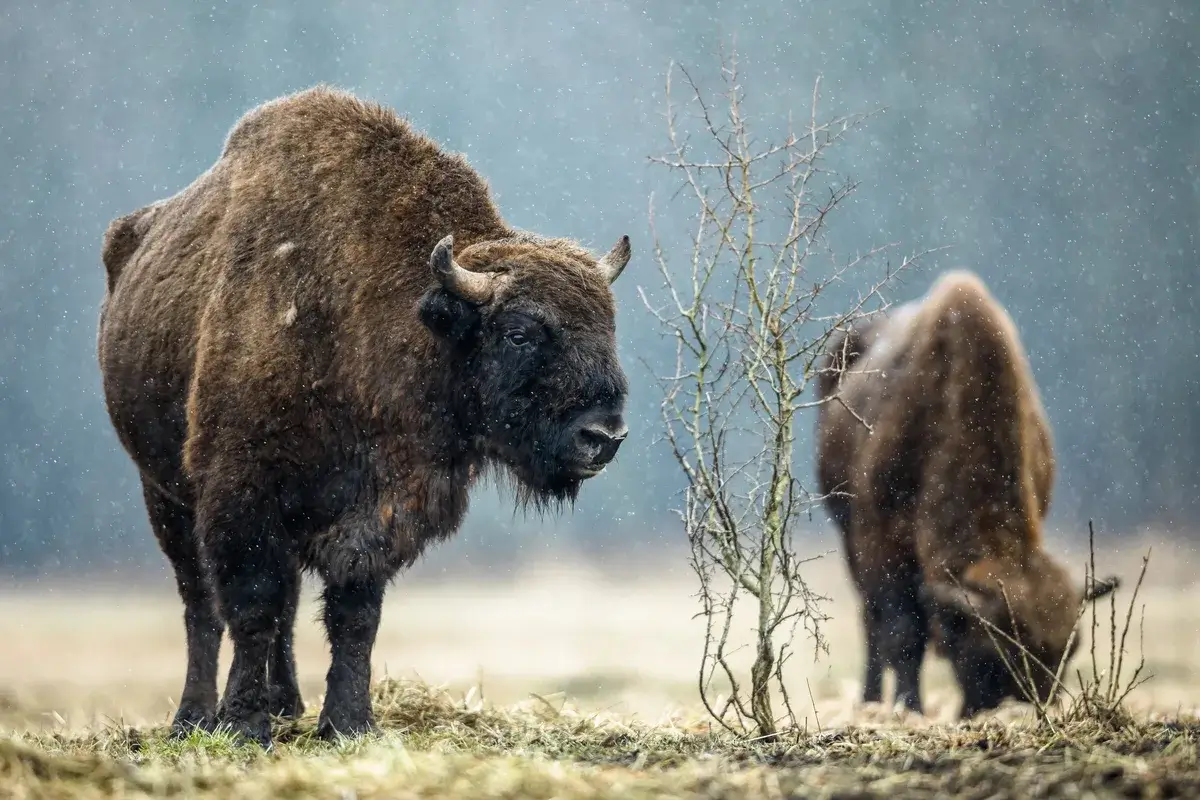
They Released 4 Bison Into a Dead Forest — Nobody Expected It to Wake Up
Four bison entered a dying English forest—and their return triggered a remarkable transformation that scientists never expected

They released four enormous bison into a forest that seemed to be dying.
No chainsaws.
No excavators.
No army of conservation workers.
Instead, four wild animals were left to behave as nature intended.
In 2022, European bison were released into West Blean Woods near Canterbury, Kent—the first wild bison to roam Britain in thousands of years.
What happened next was far more than simple grazing.
As the animals moved through the woodland, they broke branches, stripped bark, opened the canopy and churned the soil beneath their enormous hooves.
Almost immediately, their natural behaviour began creating new opportunities for life.
The video below follows this extraordinary rewilding experiment and reveals how four bison began transforming a woodland that conventional conservation had struggled to restore.
Yet there is an even more remarkable part of the story.
The species itself once stood on the edge of extinction, with only 12 known animals remaining in the early 20th century.
Now, their descendants are helping reshape a British woodland—and forcing conservationists to reconsider what a healthy forest should look like.
Why Four Bison Were Sent Into a Dying Forest
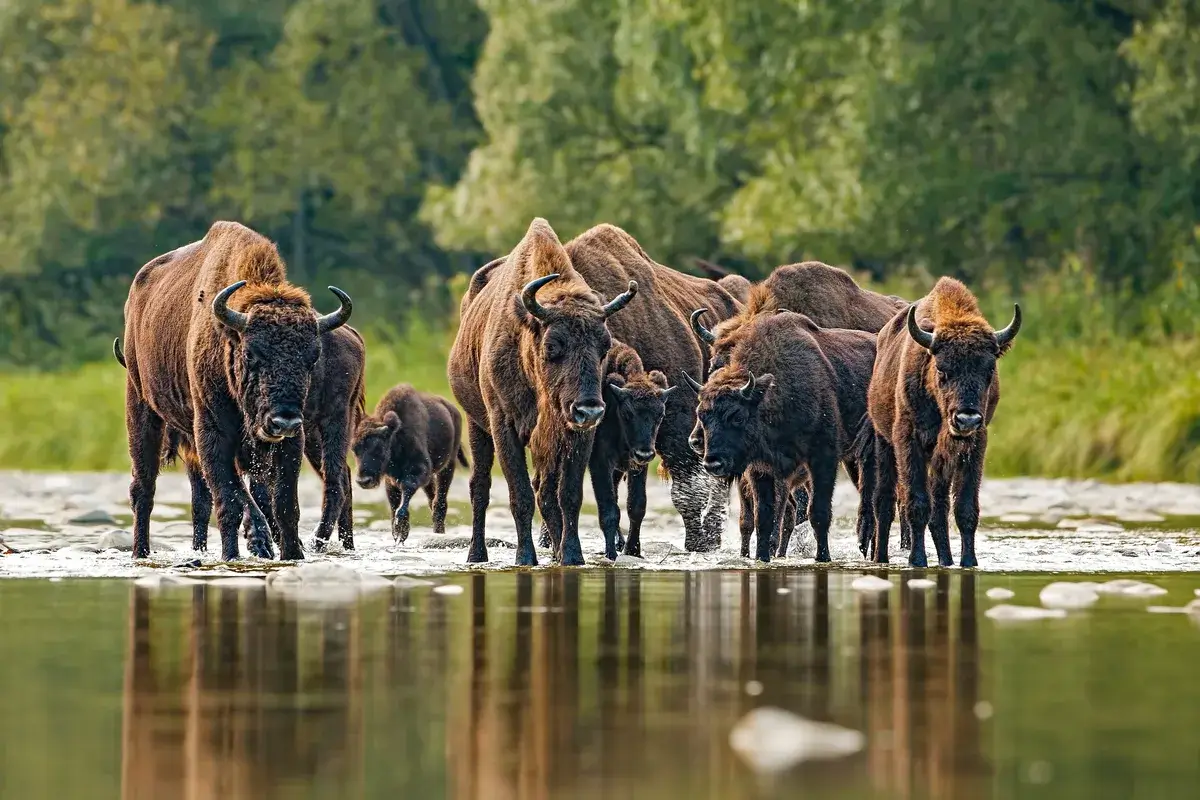
West Blean Woods had a serious problem.
The Book of Enoch Describes What’s Beneath the Ocean Floor — And Why God Sealed It There
Over time, its dense canopy blocked sunlight from reaching the ground, while the lack of natural disturbance reduced the variety of habitats available to wildlife.
For years, conservationists relied on human intervention to tackle the problem.
This time, however, they tried something radically different.
Rather than sending machines into the woodland, conservationists introduced animals capable of creating change through their natural behaviour.
As the bison moved between the trees, they pushed through vegetation and opened small gaps in the canopy.
At the same time, their enormous hooves disturbed the soil and exposed patches of bare ground.
They also stripped bark and broke branches.
Although those actions might look destructive, they created new opportunities for plants, insects and fungi.
As sunlight reached the forest floor, different species gained space to grow.
The bison were not simply occupying the forest.
They were helping reshape it.
How Bison Are Bringing the Forest Back to Life
Scientists use the term ecosystem engineers for animals that physically alter their surroundings.
Bison are a powerful example of this process.
Through grazing, they prevent certain plants from dominating the landscape.
Meanwhile, their movement creates patches of disturbed ground where other species can establish themselves.
Their dung adds nutrients to the woodland and, importantly, provides food and habitat for insects such as dung beetles.
Those insects can then become food for birds and other wildlife.
Furthermore, broken branches and damaged trees create valuable deadwood habitat.
Fungi, insects and countless smaller organisms can take advantage of these newly created spaces.
Instead of leaving the woodland floor uniform and predictable, the bison produce a constantly changing patchwork of habitats.
As a result, more species can find the conditions they need.
Most importantly, the animals do not need to understand any of this.
They simply behave like bison.
Final Verdict: Four Bison Could Change Everything
The return of European bison to Britain represents much more than the arrival of four enormous animals.
Instead, it is an experiment in allowing nature to perform work that humans have often tried to recreate themselves.
The species also has an extraordinary history.
European bison were pushed to the brink of extinction, with only 12 known animals remaining in the early 20th century.
From that tiny population, however, conservation programmes gradually rebuilt the species.
Today, their descendants are helping restore a landscape far from the forests where their ancestors once lived.
That does not mean bison are a universal solution for damaged woodlands.
Their impact will always depend on the habitat, animal numbers and careful management.
Even so, West Blean Woods demonstrates what can happen when conservation gives natural processes more room to operate.
Four bison entered a woodland that appeared to be losing its life.
Then, through grazing, trampling, browsing and fertilising the ground, they began creating opportunities for other species to return.
Perhaps the biggest lesson is the simplest.
Sometimes, saving a forest does not mean controlling nature more carefully.
Instead, it may mean giving nature the right animals—and allowing them to do what they evolved to do.
 Watch the Video
Could animals like bison be the key to restoring Britain’s damaged forests—and should humans give nature more freedom to rebuild itself?