
The Sumerian Tablet That Describes What Happens to Humans When They Die — And the Trap They Don’t See
An ancient Sumerian tablet describes a chilling journey after death, revealing a mysterious fate for humans and a trap hidden beyond the grave

What happens when a human being dies?
Thousands of years ago, Sumerian scribes were already asking the question.
Their answer was not comforting.
Ancient texts describe a Sumerian underworld hidden beneath the world of the living—a place ruled by Ereshkigal, goddess of the dead, where those who crossed its gates could not simply turn around and leave.
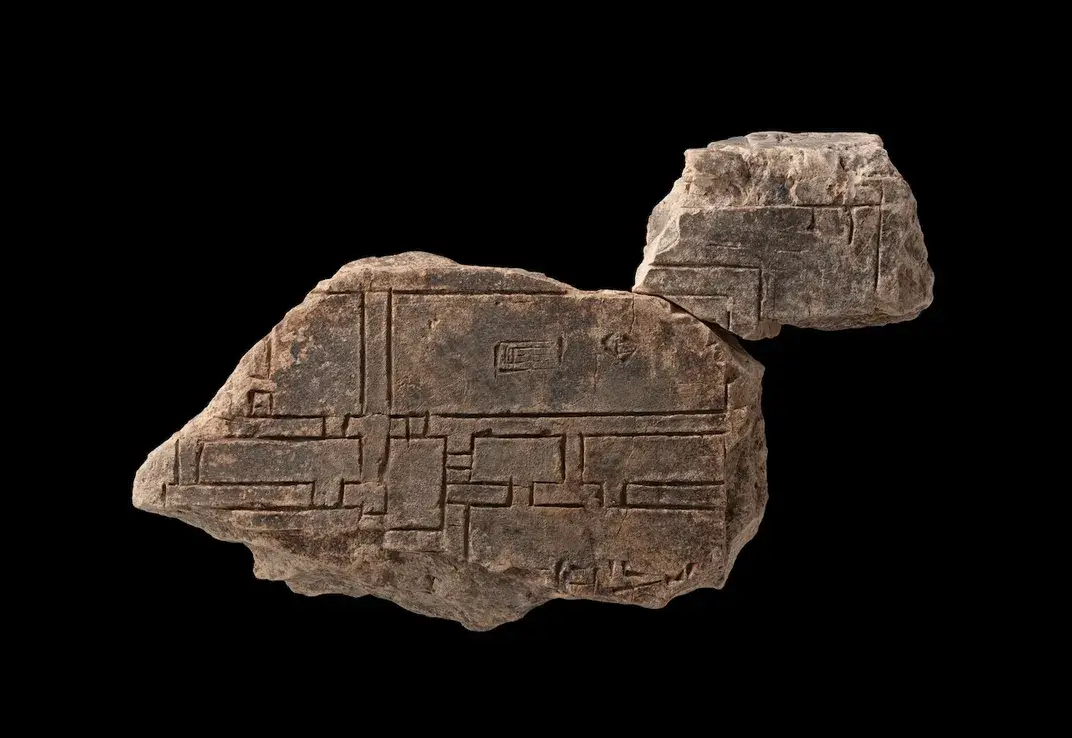
The most famous account is Inanna’s Descent, preserved across ancient clay tablets and fragments.
It tells of a journey into the realm of the dead.
And what happens there is remarkably unsettling.
The Dark World Waiting Beyond Human Death
The Sumerian afterlife was not imagined as a paradise waiting above the clouds.
What This Ancient Sumerian Tablet Says Enki Told Humans Is Disturbing
Instead, the dead entered the underworld, often associated with Kur or Kigal—the great place below.
It was a realm separated from ordinary life.
And once someone crossed into it, returning was not something the dead could simply choose.
That idea appears dramatically in Inanna’s journey.
The goddess approaches the underworld and encounters seven gates.
At each gate, something is taken from her.
Her power is stripped away piece by piece until she finally stands before Ereshkigal.
Then everything changes.
The judges of the underworld condemn her, and Inanna is struck dead.
Her body is left hanging in the realm of the dead.
For three days, she remains there.
But Inanna is not an ordinary mortal.
The Seven Gates and the Trap No One Escapes
The seven gates create one of the most haunting images in Sumerian death mythology.
Each gate forces Inanna to surrender another part of her identity.
Crown.
Jewellery.
Garments.
Power.
By the time she reaches the final gate, almost everything that marked her as a goddess has been removed.
The message is brutal.
The underworld has its own rules.
Even a goddess cannot simply ignore them.
Inanna is judged and killed, while her companion Ninshubur desperately seeks help from the other gods.
Eventually, Enki intervenes.
Inanna is restored and allowed to return—but not without a terrible condition.
Someone else must take her place.
That someone becomes Dumuzi.
And suddenly, the journey into the underworld looks less like a simple story about death and more like a warning about the price of escaping it.
Final Verdict: What the Underworld Reveals
The ancient Sumerian texts do not describe a modern-style hell where sinners are eternally tortured.
The Mesopotamian underworld was darker and stranger than that.
The dead entered a realm from which escape was extraordinarily difficult, while the living remained connected to them through mourning rituals and offerings.
Inanna’s story makes the danger even clearer.
The underworld has gates.
It has judges.
It has rules.
And crossing them comes with a price.
Yet the idea of a literal hidden “soul trap” goes beyond what the surviving Sumerian evidence proves.
What the texts actually reveal may be more fascinating.
Death was imagined as a journey into a separate world with its own laws—and even the gods had to respect them.
Thousands of years later, those ancient tablets still preserve the same haunting question.
What really waits beyond the final gate?
And if Inanna’s story is any indication, the greatest danger may not be what happens when you enter.
It may be what you must surrender to get back out.
 Watch the Video
What do you think the seven gates of the Sumerian underworld represented—and could Inanna’s terrifying journey reveal how ancient people understood death?