

New Evidence From the Shroud of Turin Reveals Something Scientists Didn’t Anticipate
New scientific analysis of the Shroud of Turin reveals unexpected findings that challenge long-held assumptions.

In the world of historical artefacts, few objects have generated as much debate as the Shroud of Turin. Long regarded by some as a sacred relic and by others as a medieval creation, it has remained at the centre of scientific and philosophical inquiry for decades. What makes the Shroud unique is not just its image, but the persistent inability of modern science to fully explain how that image formed.
For years, the dominant narrative placed the cloth in the Middle Ages, largely based on radiocarbon dating tests conducted in 1988. These results appeared to settle the debate, assigning the fabric to the 13th or 14th century. However, critics later argued that contamination, repairs, and sampling limitations may have influenced the outcome.
Recent investigations using more advanced techniques have reopened the discussion. Rather than confirming earlier conclusions, newer findings introduce additional complexity. Researchers approaching the artefact expecting resolution have instead encountered results that deepen the mystery.
As multiple disciplines contribute—genetics, physics, chemistry, and forensic analysis—the Shroud continues to resist a single, unified explanation. Instead of narrowing possibilities, modern research has expanded them.
A Re-examination of the Original Dating Results
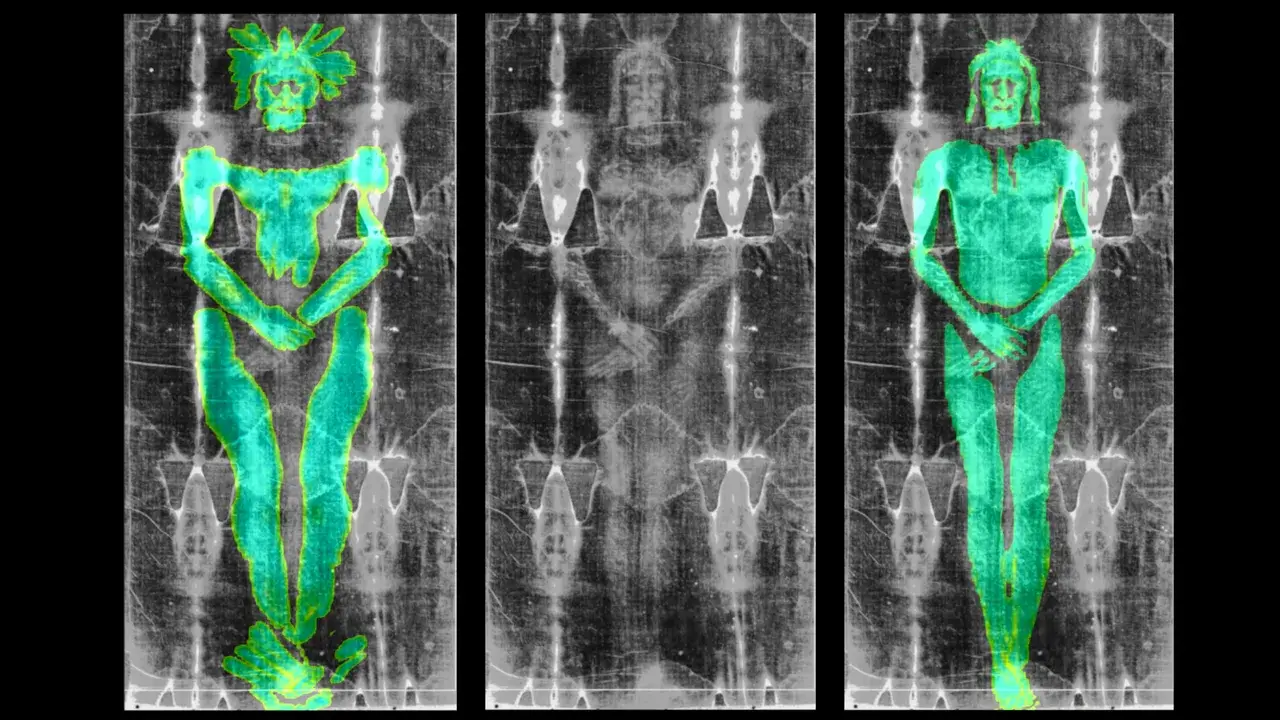
The 1988 radiocarbon dating has long stood as the strongest argument for a medieval origin. Conducted across multiple laboratories, the findings were widely accepted as definitive at the time. Yet later scrutiny raised concerns about the specific sample used.
AI Broke Down The Code of Blood Type O & Found Something Deeply Unsettling
Some researchers proposed that the tested section may have come from a repaired area, possibly introduced after damage or restoration. If accurate, the dating would reflect the repair rather than the original material.
More recent methods, including non-destructive analysis, have produced broader timelines, with some estimates extending further back than previously suggested. This has reignited debate over the cloth’s true age.
The Enigma of the Image Formation
One of the most puzzling features of the Shroud is the image itself. It is not painted, dyed, or printed in any conventional sense. Microscopic analysis shows the discoloration exists only on the outermost fibres of the linen.
Attempts to recreate the image using known historical techniques have consistently failed to produce an exact match. Even modern technology struggles to replicate its precise characteristics.
Some physicists suggest the image may have resulted from a brief, high-intensity energy burst. However, no confirmed process—ancient or modern—fully accounts for all observed properties without contradictions.
DNA Findings and Contamination Questions
Genetic testing of particles on the cloth has revealed traces of DNA from multiple sources, including humans and plants from different regions. While some interpret this as evidence of a long and complex history, others view it as contamination.
Over centuries, the Shroud has been handled, displayed, and transported, making the presence of mixed genetic material unsurprising. This complicates efforts to draw firm conclusions from the data.
Rather than providing clarity, DNA analysis highlights how difficult it is to study an object exposed to extensive environmental and human interaction.
Forensic Analysis of the Blood Marks
The visible stains have undergone extensive forensic examination. Chemical testing has identified components consistent with human blood, including hemoglobin and related markers.
The arrangement of these stains has led some experts to argue they align with injuries associated with crucifixion. Flow direction and clotting patterns appear consistent with real physical trauma.
Even so, debate continues over whether these features confirm authenticity or could be reproduced through unknown or experimental methods.
Advances in Imaging Technology
Modern imaging has allowed researchers to examine the Shroud in unprecedented detail. High-resolution scans reveal subtle variations that were previously undetectable.
One particularly intriguing aspect is the presence of apparent three-dimensional data within the image. When processed through specialized software, shading translates into depth, forming a relief-like human figure.
This property is highly unusual and not typical of traditional artwork or standard imaging processes, adding another layer of complexity.
The Role of Interdisciplinary Research
Recent studies stand out due to collaboration across multiple scientific fields. Instead of isolated analysis, researchers now combine insights from chemistry, physics, biology, and materials science.
This integrated approach has revealed connections that might otherwise remain unnoticed. At the same time, it has made interpretation more challenging, as each discipline introduces its own variables.
Rather than producing a clear conclusion, this combined effort has broadened the scope of possibilities.
Why the Debate Continues
The Shroud remains controversial because no accounts for all its features. Each theory addresses certain aspects while leaving others unresolved.
Sceptics argue that unexplained elements do not prove authenticity, while supporters suggest the accumulation of anomalies points to something beyond conventional understanding.
This ongoing divide ensures the debate remains active and unresolved.
A Mystery That Refuses Resolution
Despite decades of study, the Shroud continues to resist definitive classification. Advances in technology have not simplified the puzzle but revealed additional layers.
Each new investigation introduces further questions, reinforcing the idea that the artefact cannot be fully explained within current frameworks.
Whether viewed as a historical object, a scientific challenge, or something more, it continues to provoke curiosity and debate.
Conclusion
Recent research into the Shroud of Turin has not delivered the clear answer many expected. Instead, it has reopened questions once thought settled and introduced new areas of investigation.
From disputed dating to unexplained image formation and complex forensic findings, the evidence forms a picture that defies simple interpretation.
As scientific methods evolve, the Shroud remains an enduring enigma—challenging assumptions, inviting further study, and resisting final conclusions.
 Watch This:
If modern science continues to uncover new anomalies in the Shroud of Turin, does this suggest we are missing a key piece of the puzzle—or simply reaching the limits of what current technology can truly explain?