
Petra’s Greatest Mystery Just Got Solved — And It’s Not What We Thought
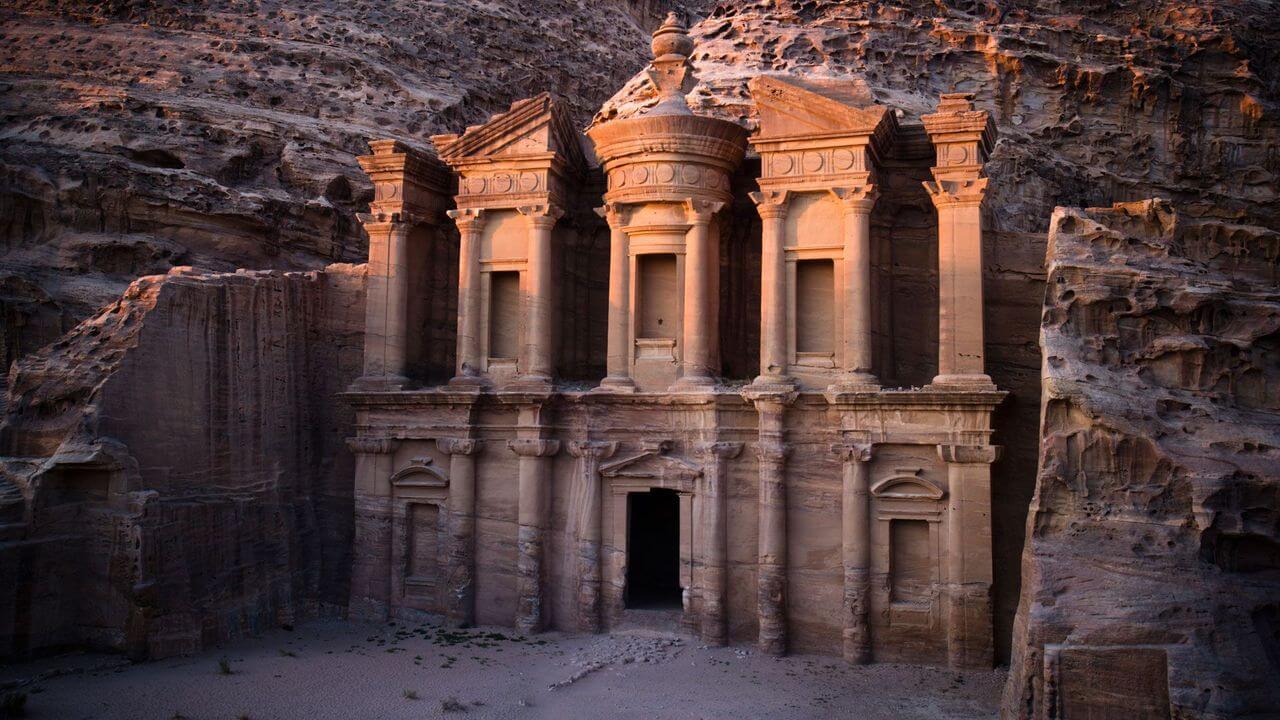
A hidden structure beneath Petra’s Treasury challenges everything we thought we knew about the ancient city.

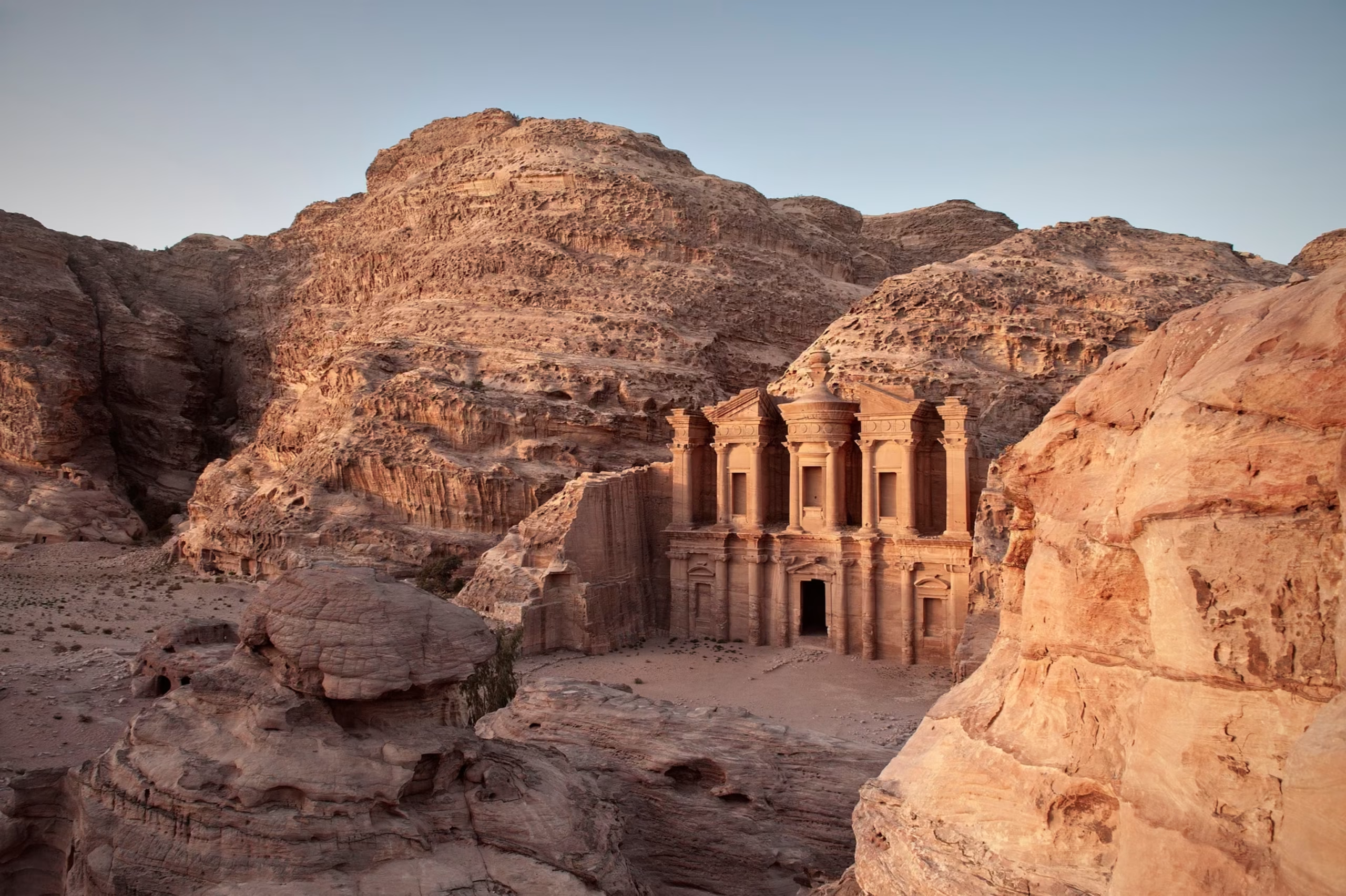
Petra has long stood as one of the world’s most enigmatic ancient cities, carved directly into rose-red cliffs and surrounded by layers of history. Once the thriving capital of the Nabataean kingdom, it functioned as a vital crossroads for trade before gradually slipping into obscurity. Even today, much about its construction, purpose, and hidden spaces remains unresolved.
In 2024, archaeologists uncovered a sealed chamber beneath the forecourt of Al-Khazneh, one of the most photographed façades on Earth. Inside were skeletal remains and burial objects, confirming that subsurface structures had been intentionally concealed for centuries. The find was significant—but not entirely unexpected within academic circles.
Online, however, the reaction quickly moved beyond standard interpretation. Instead of focusing on the archaeological context, many discussions shifted toward what might not have been disclosed. The discovery became less about what was found and more about what could still be hidden.
As speculation spread, Petra once again became a focal point where history and imagination intersect. The result is a growing collection of theories—some grounded in real gaps in knowledge, others built on assumption—each attempting to explain what lies beneath the surface.
Was the Chamber Known for Decades?
A recurring claim suggests the underground structures were never truly unknown. According to this theory, earlier surveys and restricted studies had already identified these spaces long before the public announcement.
The Stonehenge Mystery Has Been Solved After Ground Penetrating Radars Scanned Beneath Structure!
This idea is partly rooted in the long history of archaeological work at Petra, where multiple excavation phases have taken place over decades. Re-examining previously surveyed areas can appear, to some observers, as rediscovery rather than new discovery.
From this perspective, the timing of the announcement becomes the focus. The theory argues that information may have been withheld or delayed, shaping how and when the public learns about major findings.
Were Artifacts Hidden From the Public?
Another widely discussed idea is that the most significant objects were never shown. Supporters of this theory believe only a controlled portion of the findings was released, leaving out anything considered unusual or difficult to explain.
This speculation often emerges when official reports lack detailed inventories or imagery of every item recovered. The absence of complete transparency creates space for interpretation.
As a result, ordinary burial objects can be reimagined as something more—fueling the belief that the most important discoveries remain out of view.
Is It Really a Tomb?
Some discussions challenge the classification of the chamber itself. Instead of accepting it as a burial site, alternative interpretations suggest it may have served a different function entirely.
Petra is already known for advanced engineering, including intricate water systems and structural planning adapted to a harsh desert environment. This complexity encourages the idea that underground spaces may have had multiple purposes.
By questioning the “tomb” label, this theory opens the door to broader interpretations—ritualistic, symbolic, or even functional uses that extend beyond burial traditions.
Could It Be Lost Technology?
A more speculative narrative builds on Petra’s engineering achievements. Its ability to store and distribute water efficiently in an arid region is often cited as evidence of advanced knowledge.
From there, some theories extend the idea further, suggesting that additional systems—now buried or unrecognized—may have existed beneath the visible structures.
These claims are not supported by mainstream archaeology, but they persist because Petra’s sophistication leaves room for interpretation, especially when new discoveries emerge.
Did Hollywood Know First?
The appearance of the Treasury in Indiana Jones and the Last Crusade has inspired a different kind of speculation. Some suggest that filmmakers had prior awareness of hidden features at the site.
This idea blends fiction with reality, implying that cinematic storytelling may sometimes draw from restricted or lesser-known information.
While there is no evidence to support this claim, the association between Petra and popular culture continues to influence how discoveries there are perceived.
Was There an Older Civilization?
Another theory proposes that Petra may not represent the earliest phase of construction in the area. Instead, it could sit atop remnants of an older, largely unknown culture.
Supporters point to the scale and precision of the rock-cut architecture as indicators that earlier knowledge or techniques may have existed.
Each new underground discovery reinforces this idea, suggesting that what is visible today could be only part of a much deeper historical sequence.
Is Archaeology Controlling the Narrative?
Some interpretations focus less on the discovery itself and more on how information is shared. According to this view, research findings are filtered through institutions that decide what is emphasized and what is minimized.
This does not necessarily imply deliberate concealment, but rather a structured approach to presenting complex data in a simplified form.
However, for those already skeptical, this process can appear selective—leading to the belief that alternative interpretations are being overlooked or excluded.
 Watch This:
Do you think Petra’s underground discoveries are being fully revealed—or is there more hidden beneath the surface?