

Antarctica (2026) The Forbidden Continent That Holds Earth’s True History
What you are about to discover beneath Antarctica will shift your entire perspective, revealing ancient maps, buried anomalies, and clues to a forgotten world.

What lies beneath Antarctica is far more than ice. It raises questions about Earth’s forgotten history, where science, mystery, and speculation collide in one of the planet’s most extreme environments. This continent still raises questions about what lies beneath miles of ice and ancient geological layers.
Across centuries, people have connected it to unusual interpretations of ancient maps, unexplained formations, and theories that suggest parts of its history remain unclear. Mainstream research focuses on geology and climate history, while alternative interpretations challenge established views and keep global curiosity alive about the frozen continent.
Scientific studies confirm that Antarctica underwent massive climate and geological transformations over millions of years. Entire landscapes now lie buried beneath thick ice sheets. This possibility fuels ongoing debate about whether traces of ancient environments or unknown natural systems still exist below the surface.
Despite decades of exploration, extreme conditions and vast ice coverage limit access. Researchers have never studied large areas of the continent directly. These gaps in knowledge continue to support scientific investigation and alternative theories about what may lie hidden there.
Ancient Maps and Ice-Free Antarctica Debate
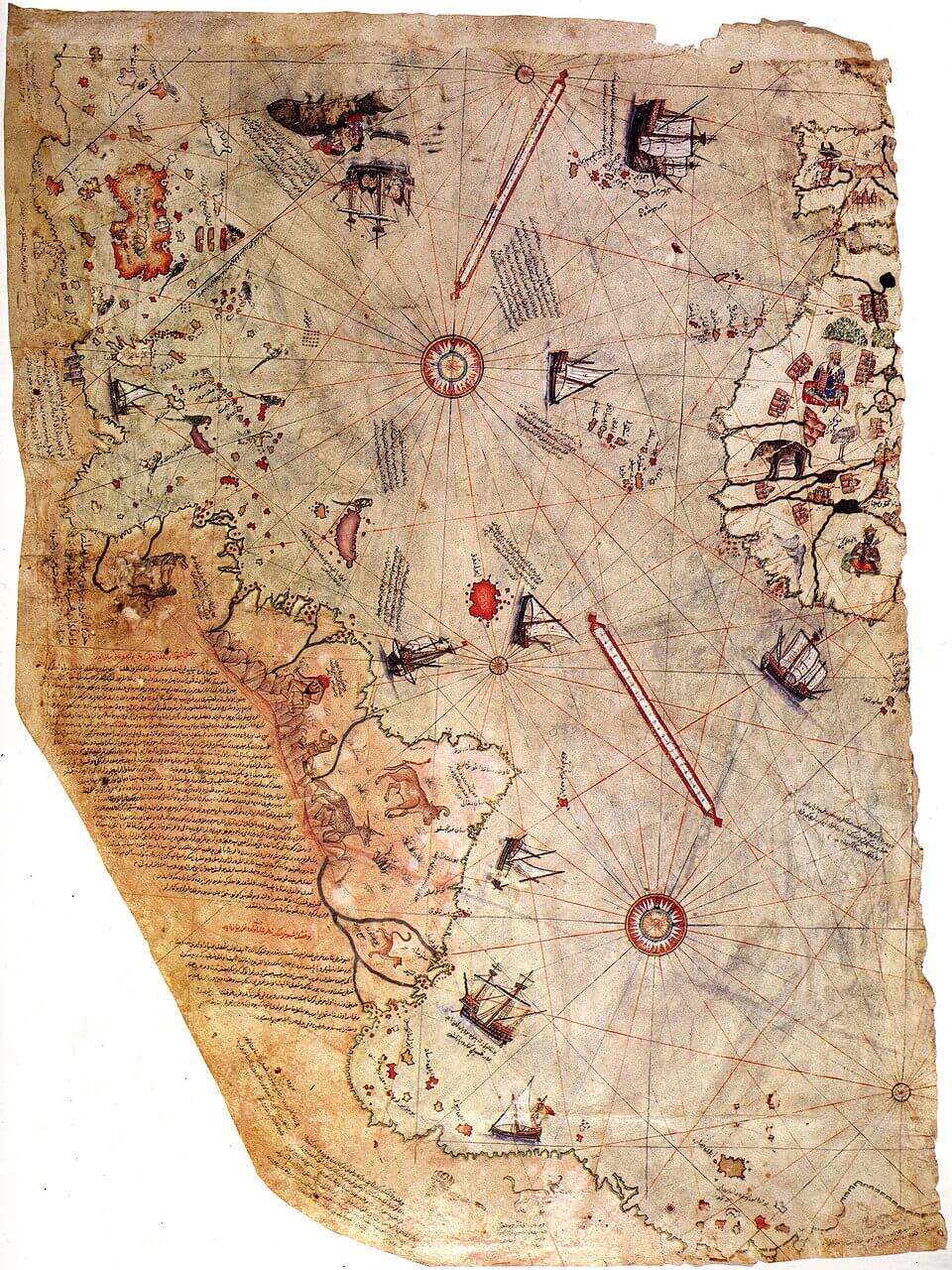
Ancient cartographic records have long sparked debate among researchers who suggest certain maps appear to show Antarctica without its ice cover. These interpretations raise questions about whether early knowledge of Antarctica may have been more advanced than traditionally believed.
The Antikythera Shipwreck Was Just Re-Excavated — What Was Found Goes Beyond The Mechanism
Mainstream historians argue these maps are likely misinterpretations or symbolic representations rather than evidence of ancient exploration. However, alternative researchers point to coastline similarities they believe deserve further attention when studying Antarctica’s past.
With no definitive historical record confirming accurate early mapping of the continent, the debate remains unresolved and continues to divide opinion between conventional science and alternative perspectives.
Unexplained Aerial Phenomena Over Antarctica
Reports of unusual aerial activity above this location have been recorded by pilots and satellite monitoring systems operating in the region. These accounts often describe brief lights or motion anomalies appearing over the Antarctic sky under extreme conditions.
Most scientific explanations link these sightings to atmospheric distortion, ice reflection, or sensor interference caused by harsh polar environments. Antarctica’s atmosphere is known to create optical effects that can mislead both human observation and instruments.
However, the remoteness of the continent makes independent verification difficult, meaning some reports remain open to interpretation and discussion.
Evidence Claims of Lost Civilisation Layers
Some theories propose it may have once supported earlier civilisations or complex ecosystems before becoming frozen due to long-term climate shifts. These ideas often connect to Earth’s natural geological cycles and shifting continents.
Scientific evidence confirms Antarctica was once significantly warmer millions of years ago, but no verified archaeological remains have ever been discovered beneath Antarctica’s ice.
Despite this, vast unexplored regions continue to raise questions about what may still be preserved in areas that have never been directly accessed or studied in detail.
Pyramid-Like Structures and Ice Formations
Certain Antarctic mountain ranges and ice formations display sharp angles and symmetrical shapes that some describe as pyramid-like when viewed from satellite images of Antarctica.
Geologists explain these features as natural results of erosion, wind exposure, and tectonic movement over long periods of time. Extreme Antarctic conditions can create unusually geometric formations that appear artificial from specific angles.
Still, the striking appearance of some Antarctic formations continues to inspire alternative interpretations and ongoing online debate.
Subglacial Lakes and Hidden Water Systems
Beneath it lies a vast network of subglacial lakes and rivers that have remained sealed under ice for millions of years. These Antarctic systems are among the most extreme environments on Earth.
Scientific research has identified microbial life in some of these lakes, offering insight into how organisms can survive in complete darkness under extreme pressure and cold.
Their isolation makes Antarctica’s subglacial environments valuable for studying Earth’s climate history and understanding life in extreme conditions.
UFO Theories and Unidentified Signals
Antarctica has occasionally been referenced in UFO discussions due to rare radar anomalies and unusual signals detected during Antarctic research missions.
Most scientific explanations link these events to environmental interference, solar activity, or technical limitations in extreme Antarctic conditions.
Despite this, limited human presence across Antarctica means some observations remain difficult to fully verify or rule out completely.
Declassified Research and Restricted Zones
Certain Antarctic research programmes have been partially declassified, revealing extensive studies focused on climate systems, ice dynamics, and geological history of Antarctica.
Restricted zones exist mainly for environmental protection and international scientific coordination, ensuring fragile Antarctic ecosystems remain undisturbed.
Limited access to some Antarctic regions continues to generate speculation about what has not yet been publicly documented.
Satellite Anomalies and Ice Surface Patterns
Satellite imagery of Antarctica has shown unusual shapes and patterns across the ice that can appear irregular or difficult to interpret.
These Antarctic anomalies are generally explained by natural ice movement, shadow effects, and distortion caused by polar lighting conditions.
Even with scientific explanations, such Antarctic visuals continue to circulate widely and attract curiosity about the continent.
Antarctica as Earth’s Deep Archive
Antarctica plays a critical role in modern science as one of the most important archives of Earth’s climate history.
Ice cores from Antarctica preserve atmospheric data spanning hundreds of thousands of years, helping researchers reconstruct past temperatures and environmental changes.
Yet much of Antarctica remains unexplored, keeping its full scientific potential still open to future discovery.
Final Thoughts
Antarctica remains a place where science and mystery exist side by side, with each expedition revealing both answers and new questions about the frozen continent.
Its climate history is increasingly understood, yet vast areas of Antarctica remain hidden beneath ice that has never been fully explored.
Whether viewed through scientific research or speculation, Antarctica continues to challenge our understanding of Earth’s past.
 Watch This:
If Antarctica holds millions of years of Earth’s hidden history beneath its ice, why do you think so much of it remains unexplored—and what do you believe future discoveries there could reveal about ancient climates, lost worlds, or unknown natural systems?