


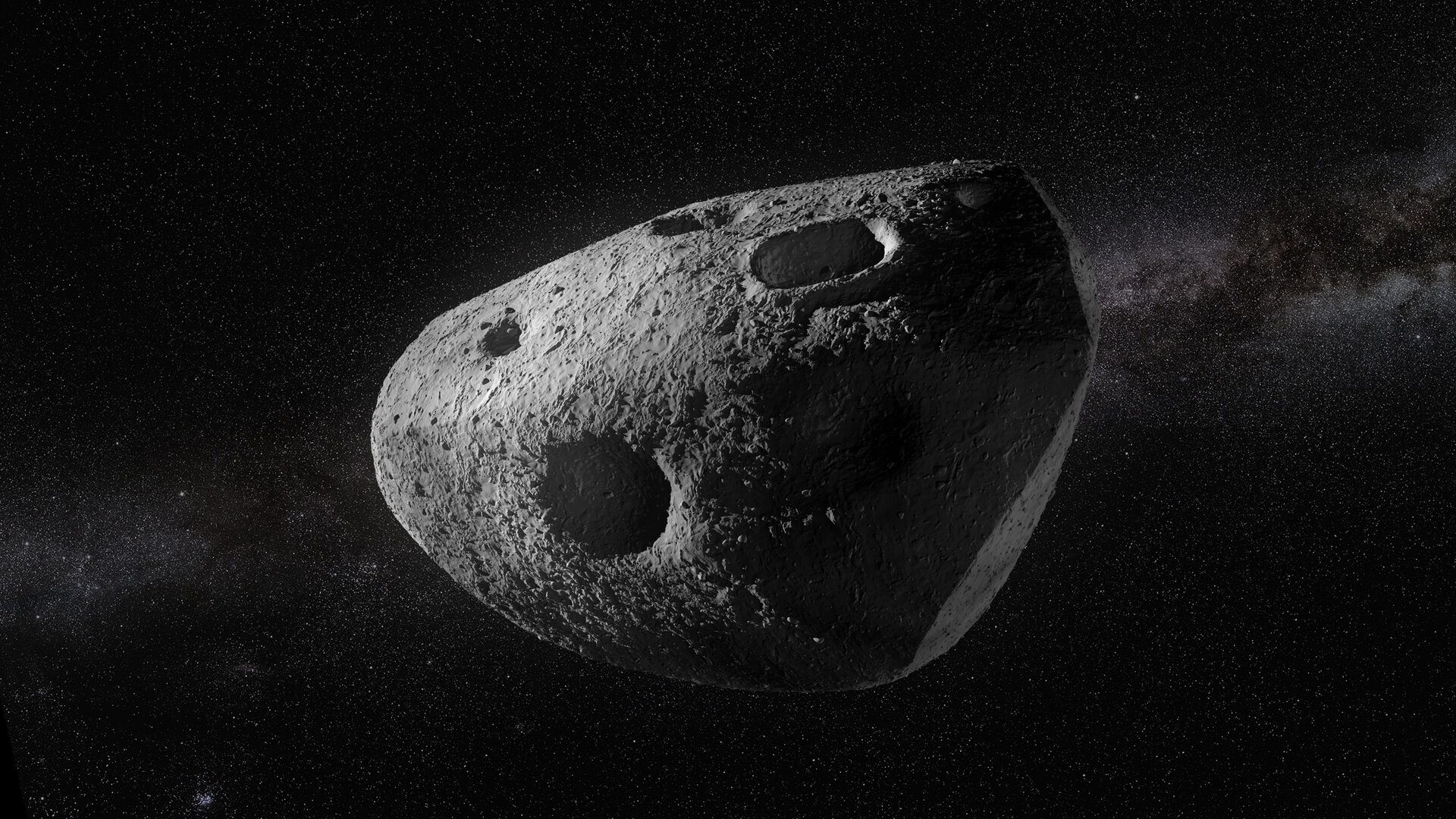
The universe has a way of reminding humanity how fragile its sense of safety truly is. 3I/ATLAS passed through our solar system quietly and harmlessly, reinforcing the comforting belief that most cosmic visitors pose no real danger. Apophis shatters that illusion. On Friday, April 13, 2029, the Apophis asteroid will sweep closer to Earth than many of our own satellites, visible without telescopes, turning the night sky into a reminder of how thin the line is between stability and disaster.
The Difference Between 3I/ATLAS and Apophis
3I/ATLAS entered the solar system as a short-lived curiosity. Astronomers observed it, confirmed there was no threat, and it departed without consequence or lasting impact.
Apophis is fundamentally different. It is not a one-time visitor but a recurring presence whose orbit repeatedly intersects Earth’s neighbourhood, demanding long-term monitoring.
Most importantly, Apophis approaches Earth at a scale that changes perception. It transforms from an abstract space object into something directly observable, immediate, and unsettling.
Apophis Asteroid 2029 Close Encounter
On April 13, 2029, Apophis will pass within roughly 32,000 kilometres of Earth. This distance places it closer than many operational satellites, a historic first for an asteroid of its size.
For several hours, it will move visibly across the sky, appearing as a bright, fast-shifting point of light. No advanced equipment will be required to witness it.
During this brief window, Earth’s gravitational influence will measurably affect Apophis. The encounter becomes a live demonstration of how planetary forces subtly reshape cosmic paths.
This moment matters not because of fear, but because of precision. The smallest deviation during this pass can echo far into the future.
An Astronaut Talks About The Significant “Big Lie” He Discovered After Viewing Earth From Space
Apophis Impact Risk and Orbital Shift
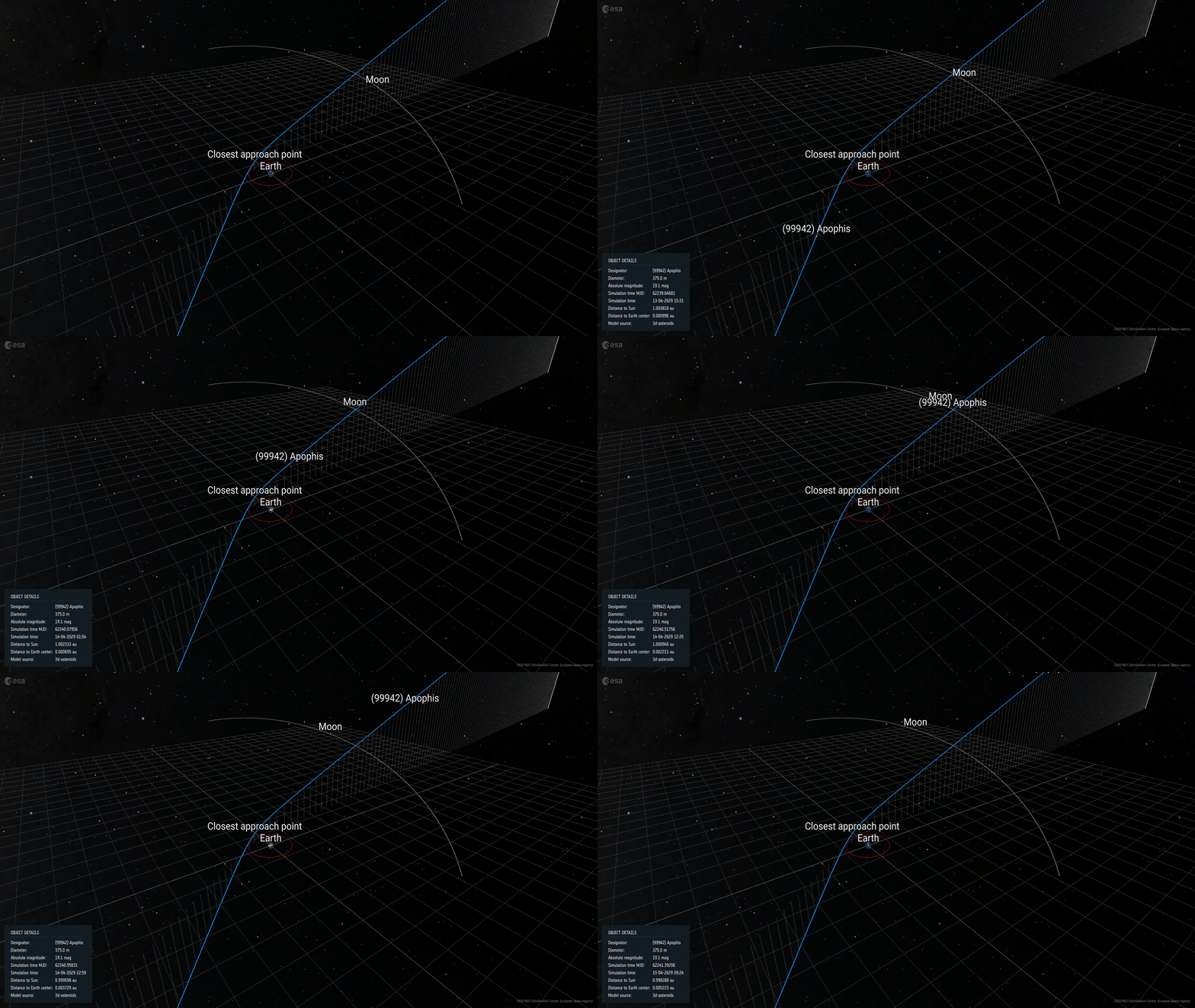
There is no impact threat in 2029. Still, discussions of Apophis impact risk persist because orbital mechanics evolve over time, not in absolutes.
Earth’s gravity will slightly alter the asteroid’s trajectory. These changes, though minute, are critical when projected decades forward.
Scientists will analyse radar data, optical tracking, and space-based measurements to refine predictions and eliminate uncertainty.
This process strengthens planetary defence systems and prepares humanity for future near misses that may not be as forgiving.
Why Apophis Is a Near Earth Object

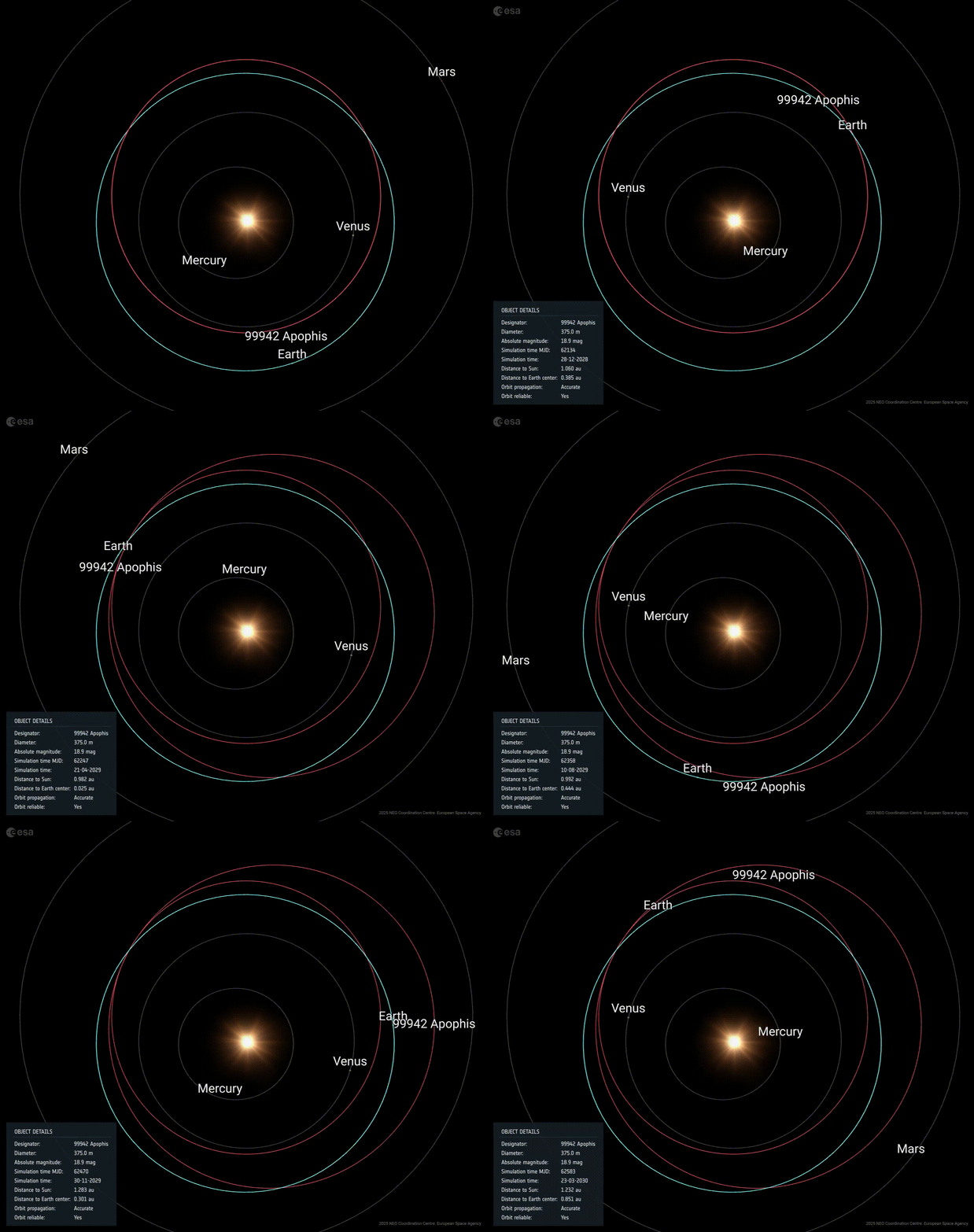
Apophis qualifies as a near Earth object because its orbit crosses Earth’s path around the Sun. This alone places it under constant scientific scrutiny.
Its size and repeated proximity elevate it beyond routine observation targets. A body of this scale carries real consequences if trajectories ever align.
Near Earth object Apophis has become a benchmark for how effectively humanity can identify, track, and model potential asteroid threats.
The Meaning of Friday the 13th 2029
The date asteroid Friday the 13th 2029 has captured global attention, blending cultural symbolism with scientific reality.
While the calendar holds no physical power, timing influences perception. Symbolic dates amplify awareness and public engagement.
This convergence of superstition and science has ensured Apophis remains one of the most widely discussed asteroids in modern history.
Key Facts About 99942 Apophis
99942 Apophis facts ground speculation in measurable reality.
- Estimated diameter exceeding 300 meters
- Classified as a potentially hazardous asteroid
- Visible without telescopes during the 2029 flyby
- Extensively tracked by NASA and ESA
- Orbit mapped decades in advance
These facts reveal both the seriousness of Apophis and the sophistication of modern astronomy.
Conclusion

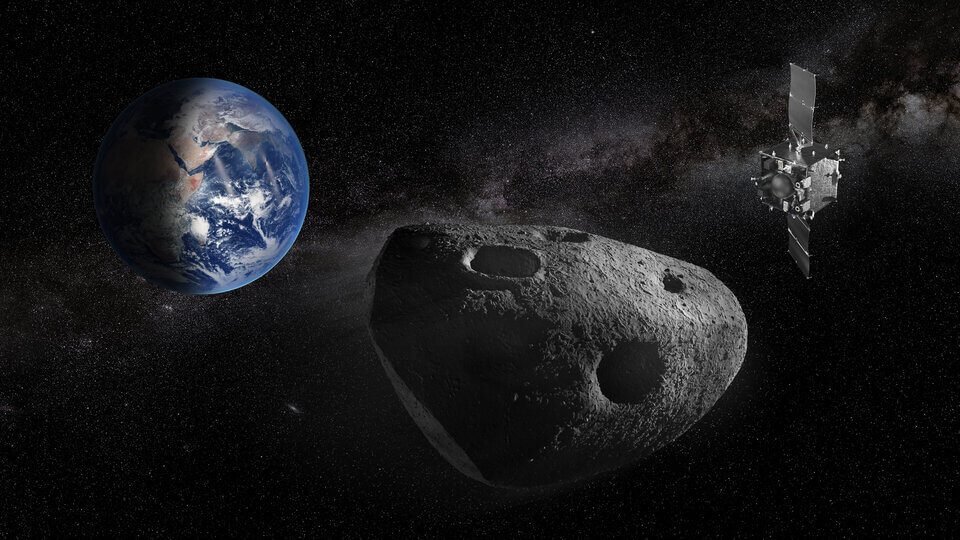
Apophis is not a prophecy of destruction, but it is a warning etched into orbital math. The contrast between the harmless journey of 3I/ATLAS and the razor-close passage of Apophis exposes how little separates cosmic calm from genuine danger. April 13, 2029 will be remembered not for impact, but for perspective — a moment when humanity looks up and understands how fragile “safe” truly is.


