


The Shroud of Turin stands at the centre of one of history’s most enduring debates, where science, belief, and uncertainty collide. For centuries, this ancient cloth has drawn attention from researchers determined to uncover whether it is an authentic relic or an elaborate creation. Among the sceptics was Barrie Schwortz, a Jewish photographer who initially set out to document what he believed would be a clear case of forgery.
In 1978, Schwortz joined a team of scientists given rare access to examine the artefact in detail. What began as a routine investigation quickly evolved into something far more complex. Instead of uncovering straightforward answers, the team encountered features that resisted explanation and challenged existing assumptions.
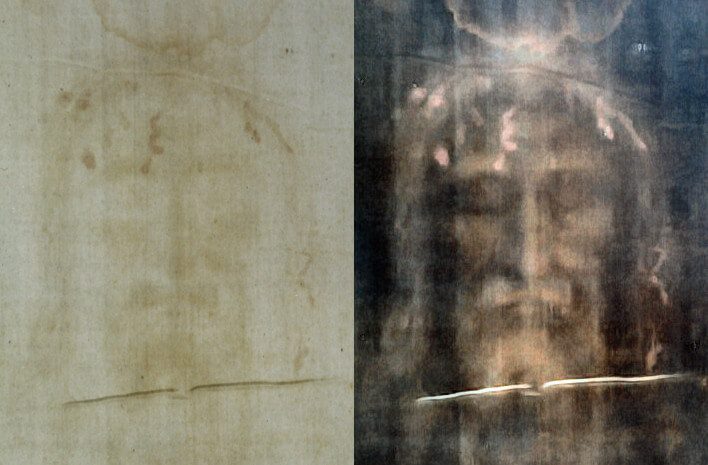
One of the earliest surprises involved the image itself. Unlike traditional artwork, the figure imprinted on the linen behaves like a photographic negative, a phenomenon first revealed in the 19th century. Even more striking, modern analysis suggested the image holds depth information, adding an entirely unexpected dimension to the discovery.
Over time, Schwortz’s position shifted. While he remained cautious about drawing conclusions, he acknowledged that the evidence did not fit neatly into any known category. His experience reflects a broader pattern—each layer of investigation seems to complicate the picture rather than clarify it.
The Origins of the Investigation

The first large-scale scientific examination began in 1978 with the Shroud of Turin Research Project. This group brought together experts from multiple disciplines, each focused on understanding how the image could have formed.
Mel Gibson Finally Admits What He Found In The Shroud of Turin
Schwortz served as the team’s documenting photographer, capturing high-resolution images under specialized lighting conditions. These photographs revealed subtle details that standard observation could not detect.
As testing progressed, familiar explanations began to collapse. Attempts to recreate the image using known artistic or chemical techniques failed, pushing researchers into unfamiliar territory.
The Negative Image Discovery
When Secondo Pia photographed the cloth in 1898, he uncovered something entirely unexpected. The photographic negative revealed a lifelike positive image, complete with detailed facial features.
This property immediately set the artefact apart. It suggested a level of sophistication that seemed out of place for its supposed historical period.
Further analysis confirmed that the tonal structure behaves consistently with photographic inversion, a characteristic that still lacks a clear explanation.
The 3D Image Phenomenon
A major breakthrough came when scientists applied image-processing technology originally developed for space research. When analysed, the image translated into a three-dimensional form.
Unlike paintings or standard photographs, which distort under such conditions, this image maintained consistent spatial relationships. The intensity of shading appeared to correspond with distance.
This finding introduced a new challenge. It implied that the image carries encoded depth data, something no traditional method has been able to reproduce.
Evidence of Real Blood
Laboratory testing identified components consistent with human blood, including hemoglobin and serum traces. These findings ruled out simple paint-based explanations.
Even more significant was the sequence of events. The blood appears to have been present before the image formed, suggesting two separate processes.
This detail complicates many theories, as it requires an explanation for both the biological material and the image formation itself.
Forensic Details of Crucifixion
Medical analysis has highlighted striking anatomical accuracy. The placement of wounds aligns with what is known about Roman crucifixion practices.
Marks on the wrists, rather than the palms, indicate an understanding of how the body would have been supported. Additional injuries suggest severe scourging and trauma.
These observations go beyond artistic interpretation, pointing instead toward a detailed and realistic depiction of physical suffering.
The Carbon Dating Controversy
Carbon dating in 1988 appeared to settle the debate by placing the cloth in the medieval period. However, that conclusion did not go unchallenged.
Later research suggested the tested samples may have come from a repaired section rather than the original fabric. Chemical inconsistencies supported this possibility.
As a result, the dating results remain disputed, leaving the question of age unresolved.
Pollen and Geographic Clues
Microscopic analysis revealed pollen grains from plant species native to the Middle East. Some were linked specifically to regions near Jerusalem.
These findings suggest the cloth may have travelled across multiple regions before arriving in Europe. Trade routes provide one possible explanation.
While not definitive, the botanical evidence adds another piece to an already complex puzzle.
The Bilirubin Discovery
One of the most unusual findings involves bilirubin, a compound produced under extreme physical stress. Elevated levels were detected in the bloodstains.
This helps explain why the stains have retained a reddish appearance over centuries, rather than darkening as expected.
The presence of this compound points toward severe trauma, adding a biological dimension that deepens the overall mystery.
A Mystery That Endures

Decades of study have produced data, but not definitive answers. Each discovery introduces new variables rather than closing the case.
For some, the artefact holds spiritual significance. For others, it represents a scientific challenge that has yet to be solved.
Either way, it continues to provoke debate, inviting fresh perspectives and ongoing investigation.
Conclusion
After decades of analysis, testing, and debate, the Shroud of Turin remains one of the few artefacts where every attempted explanation leaves something unanswered. Scientific tools have revealed layers of complexity—from unexplained image formation to detailed forensic accuracy—yet no single theory has managed to account for all of its features at once.
Rather than closing the case, each discovery has widened it, exposing gaps in both sceptical and supportive arguments. What makes the Shroud so compelling is not just what has been found, but what still cannot be fully explained using current knowledge.
In the end, the Shroud does not offer clear answers—it forces a confrontation with uncertainty itself, standing as a rare example where history, science, and belief continue to collide without resolution.


