
The radio transmitter was supposed to help scientists follow the movements of an invasive Burmese python moving through Florida’s vast wetlands. For days, the signal behaved normally as the snake slowly travelled through marshes and dense vegetation. Then the pattern suddenly changed.
Instead of the slow, winding movement typical of a large snake, the signal began moving faster and in straight bursts across the swamp. The behaviour no longer matched the animal researchers had tagged. Something unusual had clearly happened.
When the team finally reached the coordinates, the snake itself was gone. There were no scales, no signs of a struggle, and no visible remains anywhere in the area. Yet the transmitter continued to broadcast.
The most disturbing explanation quickly became clear. The python had been consumed, and the tracking device was now transmitting from inside another animal somewhere in the swamp.
The Strange Signal Pattern

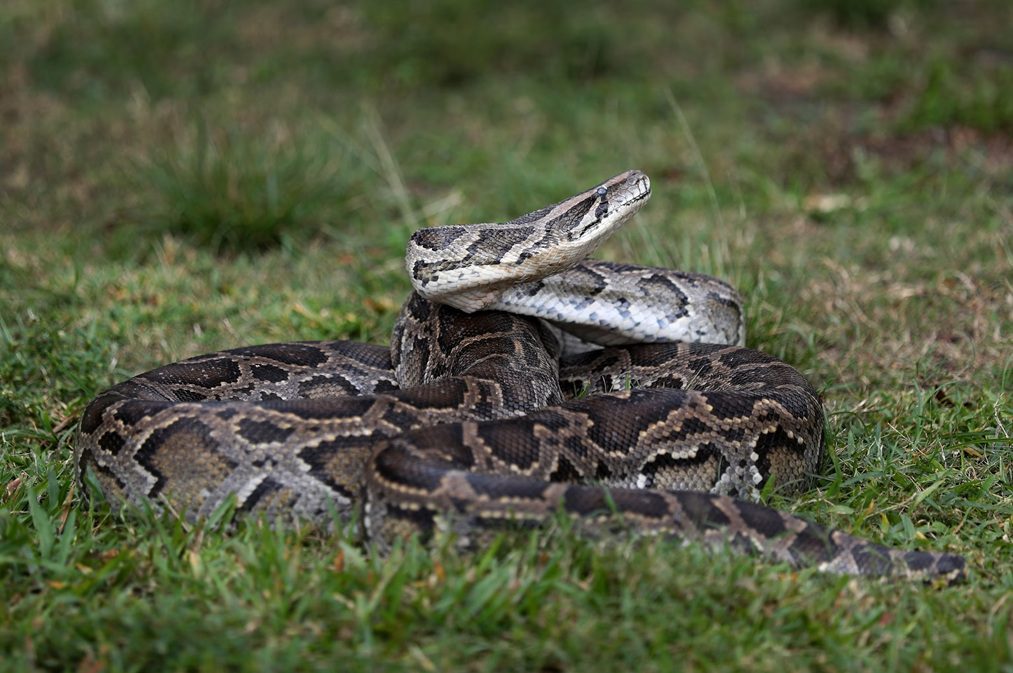
The missing snake had been part of a long-term study monitoring invasive python populations across southern Florida. Biologists had equipped the animal with a small radio transmitter designed to track its movements for months.
Florida Released Robotic Rabbits To Kill Pythons — What Happened Next Is INSANE
At first the signal data looked exactly as expected. The reptile moved slowly through wetlands while likely searching for prey among the thick vegetation.
But after several days, the signal began traveling in ways that made no sense for a python. The movement pattern had clearly changed to something much faster and more direct.
When Researchers Arrived
When the research team finally reached the coordinates, they expected to find the snake resting somewhere nearby. Instead, the area appeared completely empty.
No trace of the python could be found in the mud, water, or surrounding vegetation. The only evidence the animal had ever been there was the persistent tracking signal.
That signal revealed a shocking truth: the transmitter was no longer inside the python. It had been carried away by whatever predator had eaten it.
Tracking the Predator
Once the team realized the device had moved into another animal, the investigation became even more unusual. Instead of tracking a snake, they were now following its predator.
The signal showed bursts of rapid movement followed by long periods of stillness. The pattern suggested a large hunter capable of traveling quickly across water and land.
These movement patterns immediately ruled out many of the Everglades’ smaller predators, narrowing the list of possible suspects.
Cameras Reveal the Clue
To identify the mystery animal, researchers placed motion-activated cameras in areas where similar disappearances had occurred before.
For weeks, the cameras captured ordinary swamp life: raccoons wandering through the marsh, birds searching for food, and smaller reptiles moving through the mud.
Then one camera recorded something much larger passing through the same location where a tracked python had vanished. The footage provided the strongest clue yet.
The Most Likely Predator

The images pointed toward one powerful candidate: a very large American alligator. Mature gators can reach enormous sizes and dominate many areas of the swamp.
Although Burmese pythons are formidable hunters themselves, confrontations between the two giants sometimes end with one overpowering the other.
In rare cases, a massive alligator may be strong enough to crush and consume a large python if the opportunity arises.
A Battle at the Top of the Food Chain
Florida’s wetlands have quietly become the stage for an unusual rivalry between two apex predators. Burmese pythons, introduced through the exotic pet trade, have spread widely through the ecosystem.
Their arrival dramatically reduced populations of many mammals and birds in some regions of the Everglades.
Alligators may now be one of the few native animals capable of competing with these giant snakes. When the two predators encounter each other, the outcome can be unpredictable.
Final Thoughts
The strange tracking signal first appeared to be a technical malfunction or a mystery researchers could not easily explain. A predator capable of consuming such a large snake seemed unlikely.
But the data and camera evidence suggest that enormous alligators may occasionally overpower and eat these invasive reptiles.
As scientists continue studying the Everglades, more hidden encounters between its largest predators may come to light. Deep within the swamp, the struggle for dominance is still unfolding.