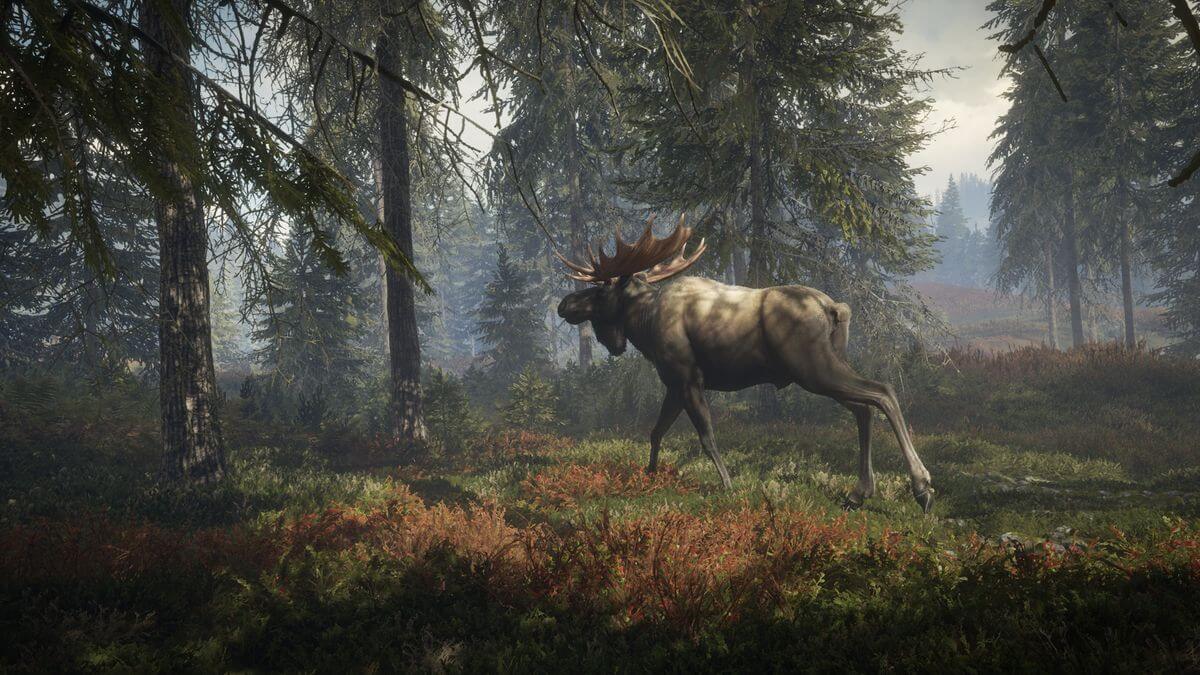
Moose have long symbolized the wild forests of northern New England. Towering, calm, and seemingly unstoppable, these animals dominate the landscape of places like Maine. For decades, their populations remained relatively stable, and wildlife biologists saw them as one of the region’s great conservation success stories. But in recent years, something deeply disturbing began to unfold in the forests.
Field researchers started noticing an alarming pattern. Moose calves—new-borns that should have been the future of the population—were disappearing at an unprecedented rate. In some areas of Maine, nearly 90% of calves died during a single winter season. This wasn’t a gradual decline or a minor ecological shift. It was a catastrophic collapse happening within months.
When biologists began investigating the carcasses, they didn’t find the usual causes of death. There were no signs of predators. No evidence of starvation from lack of food. Instead, researchers discovered animals that had essentially been drained of life by something far smaller and far more terrifying than wolves or bears.
The forests themselves hadn’t changed dramatically at first glance. But hidden among the trees was a parasite that had quietly gained a devastating advantage. What scientists uncovered would reveal how a tiny creature could turn one of North America’s most powerful animals into a helpless victim.
The First Alarming Discoveries

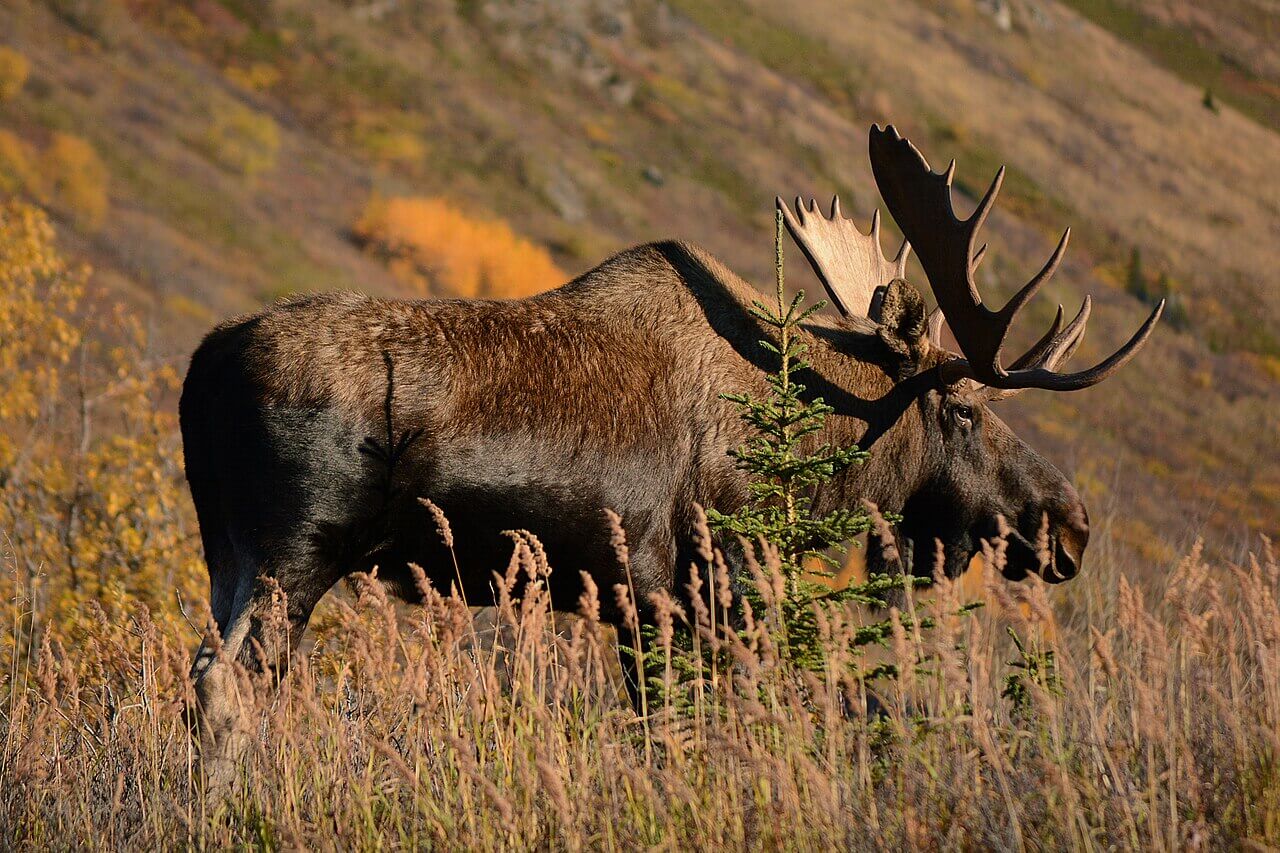
The mystery began when wildlife officials started tracking new-born moose calves using radio collars. These devices allowed researchers to monitor their movements and survival rates throughout the harsh winter months. What they discovered was shocking.
Camera Thrown Into Mel’s Hole! What They See Terrifies The Whole World
Calves were dying at a rate far beyond anything recorded before. Signals from the collars frequently stopped moving, forcing researchers to travel deep into the forest to investigate. One after another, they found lifeless young moose lying in the snow.
Initially, scientists suspected predators such as black bears or coyotes. But when they examined the bodies, the evidence didn’t support that theory. Instead of wounds or signs of a struggle, the animals appeared weak, emaciated, and strangely pale.
The Horror Covering Their Bodies

As biologists looked closer, they noticed something crawling through the fur of the dead calves. Thousands of tiny parasites clung to the animals’ skin. These were winter ticks, a species known to feed on large mammals.
Normally, moose can survive small numbers of these ticks. But the calves researchers examined were carrying tens of thousands of them. Some estimates suggested individual animals were infested with more than 70,000 ticks at once.
The parasites fed continuously, sucking blood from the animals’ bodies. Over time, the massive infestations caused severe blood loss, weakness, and eventually death. The calves had essentially been consumed alive by parasites.
Why the Moose Lose Their Fur
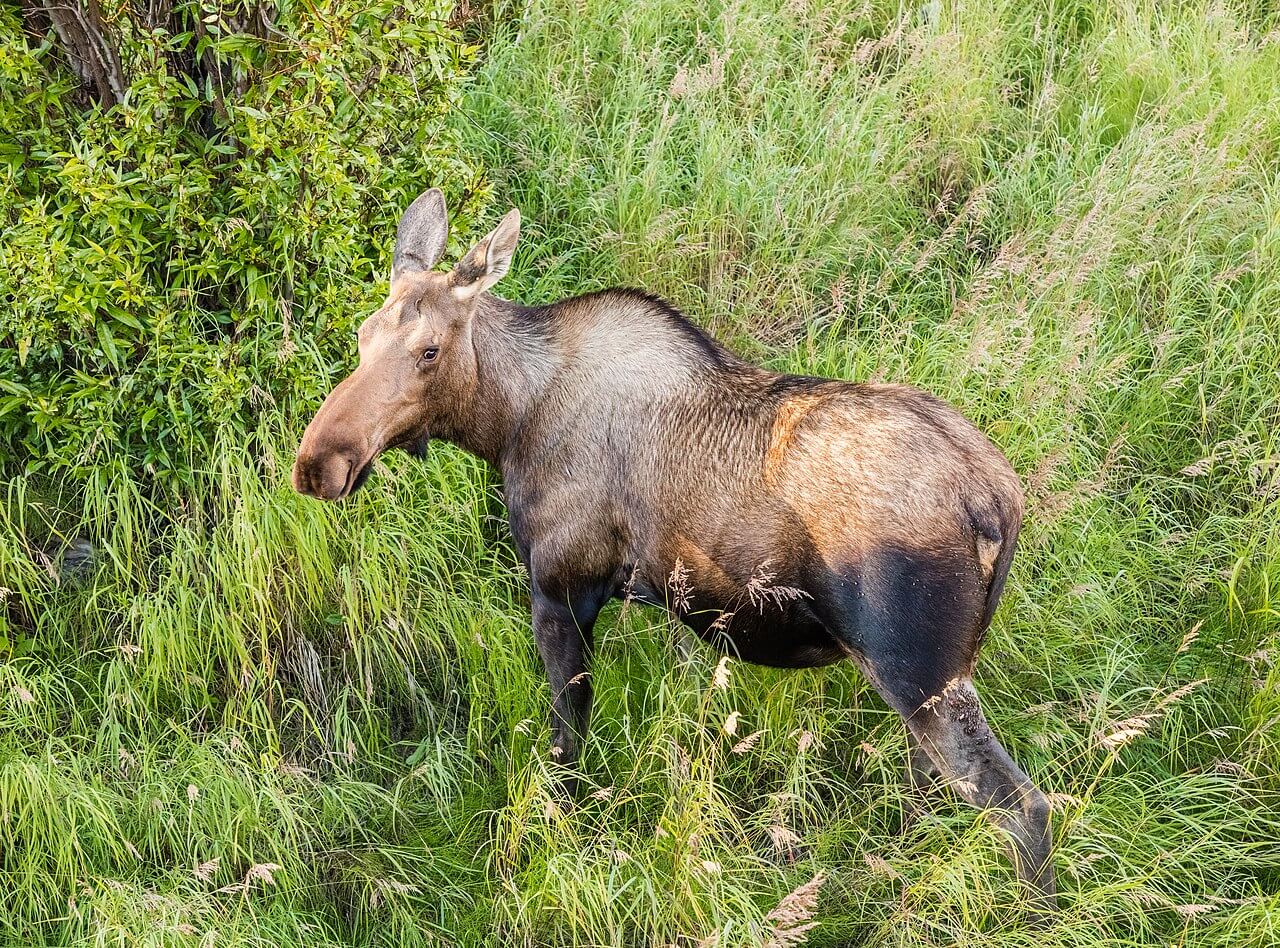
Another disturbing clue appeared when scientists examined living moose in the region. Many of them had large patches of missing fur, exposing pale skin underneath. Locals began calling them “ghost moose.”
The animals were scratching and rubbing their bodies against trees in desperate attempts to remove the ticks. This constant grooming caused them to tear out their own insulating fur during the coldest months of winter.
Without that protection, the moose lost critical body heat. Combined with blood loss from the parasites, the animals became dangerously weak. Calves, which already struggle to survive their first winter, rarely stood a chance.
How Climate Helped the Parasites
Researchers soon realized that the explosion of winter ticks was not random. Environmental changes had created ideal conditions for the parasites to multiply rapidly across the region.
Warmer autumn temperatures allowed tick larvae to survive longer and attach to more hosts. In the past, early snowfalls and colder weather would kill large numbers of them before they could find animals.
Now, the extended warm seasons gave ticks more time to latch onto passing moose. Once attached, they could remain on the host all winter, feeding and reproducing in enormous numbers.
A Cycle That Keeps Getting Worse
The problem doesn’t end with a single winter. Moose weakened by heavy infestations often survive into spring but remain severely stressed and undernourished.
When these animals produce calves the following year, the young are born into an environment already saturated with parasites. The cycle repeats itself, often with devastating results.
Each generation of ticks can spread across the landscape as moose travel through forests and wetlands. This allows the parasites to infest new animals continuously, amplifying the crisis.
Scientists Searching for Solutions
Wildlife biologists across New England and Canada are now working urgently to understand how to slow the spread of winter ticks. Some researchers are studying whether reducing moose population density could help limit infestations.
Others are examining how climate patterns influence tick survival and reproduction. Understanding these environmental factors could help predict future outbreaks and protect vulnerable populations.
Despite these efforts, the situation remains difficult. Moose are large, wide-ranging animals that cannot easily be treated or protected from parasites across vast wilderness areas.
Conclusion
The tragedy unfolding in Maine’s forests reveals how fragile even the most powerful wildlife populations can be. A creature as massive as a moose can be brought down not by predators, but by thousands of tiny parasites working together.
What makes the situation even more alarming is that this crisis is closely tied to environmental changes. As winters grow shorter and warmer, the balance between animals and parasites continues to shift in dangerous ways.
For scientists and conservationists, the fight to protect moose is now about more than saving a single species. It is about understanding how small ecological changes can trigger massive consequences across entire ecosystems.