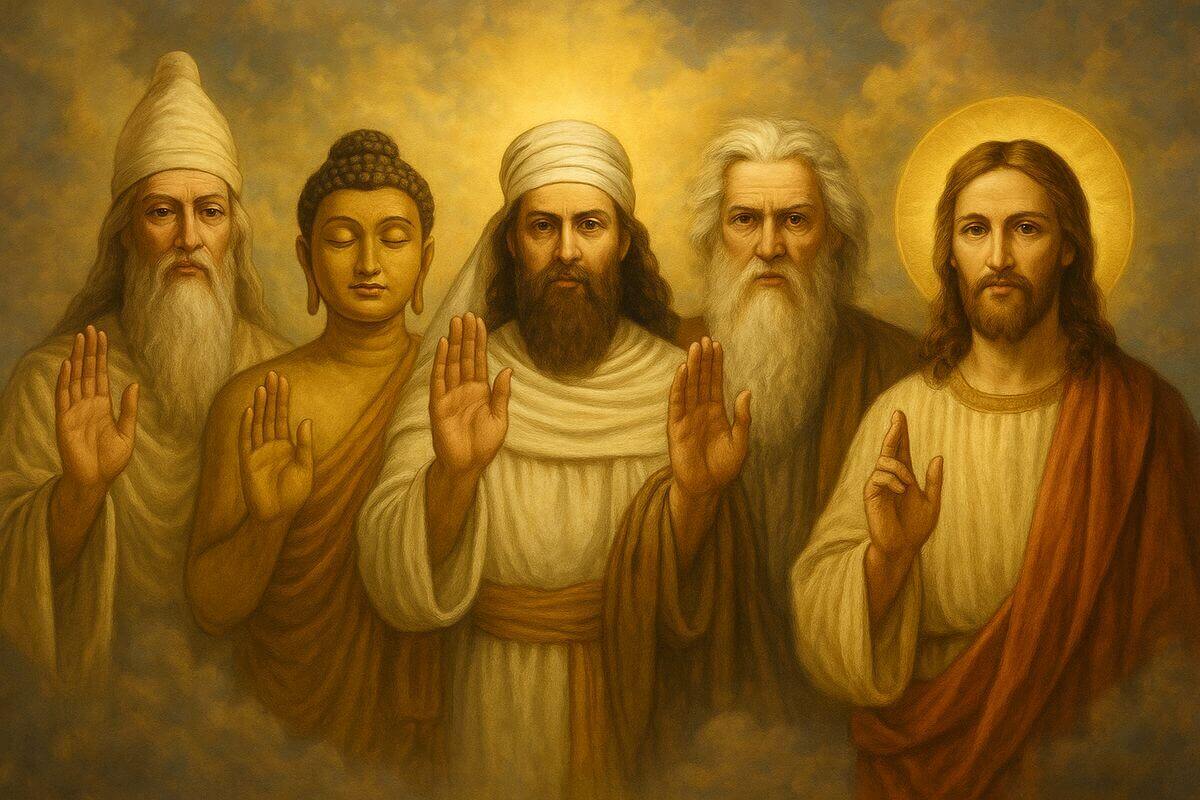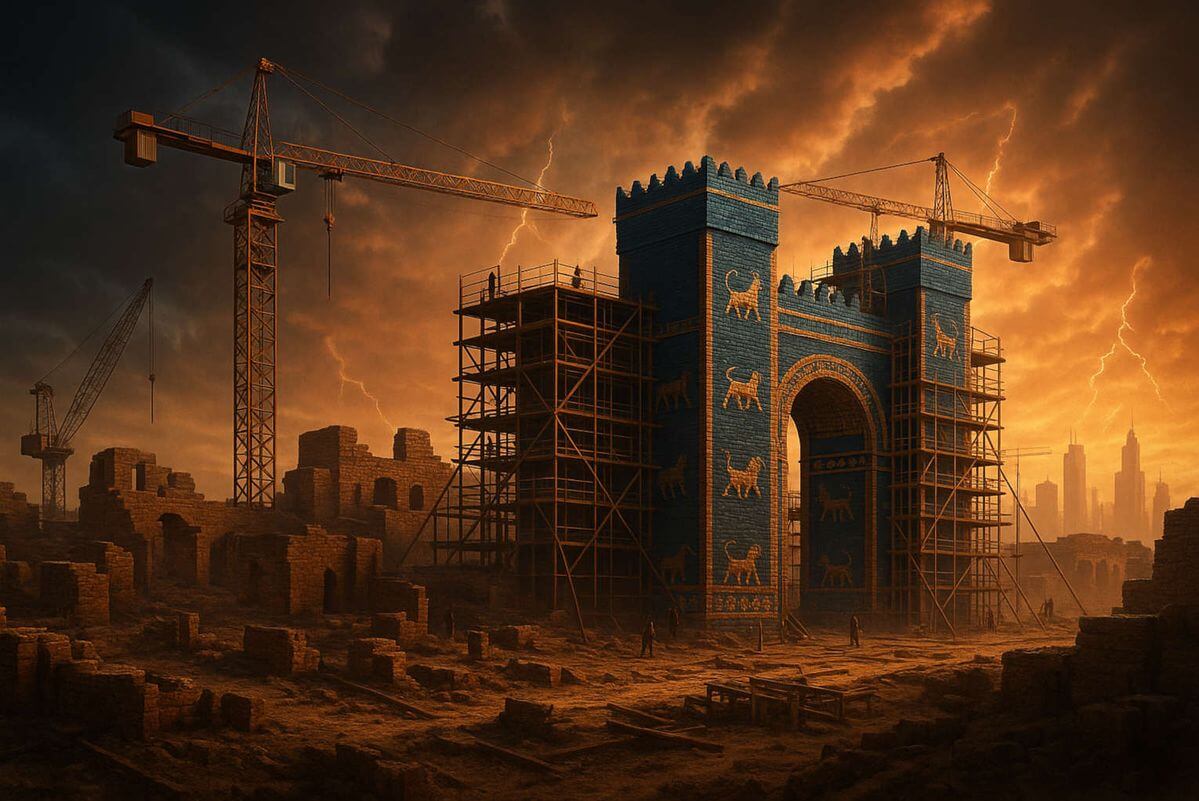
God appearing in three forms is not a modern invention. Long before later religious traditions shaped similar ideas, ancient Sumerians described a powerful triad that governed reality itself. This triad—Anu, Enki, and Enlil—forms what many refer to as the Dark Trinity, a system that may reflect how early civilization understood power, order, and creation.
Sumer, the earliest known civilization, left behind thousands of clay tablets that do more than tell stories. They describe a structured cosmos governed by distinct intelligences operating within a strict hierarchy. Reality, in this worldview, is not random but organized through defined roles and forces.
At the peak of this order stands Anu, the distant sky ruler who embodies ultimate authority. Beneath him, Enlil enforces structure and balance within the physical world. Enki introduces knowledge, adaptation, and subtle disruption. Together, they form a triad of stability and tension.
Whether interpreted as mythology or fragmented memory, the Sumerian system is highly structured. It presents a model of existence built on hierarchy, function, and controlled balance rather than chaos or chance.
The Origins of the Sumerian Trinity


The system begins with Nammu, the primordial sea from which all existence emerges in Sumerian cosmology. From this origin, the first layers of divine order take shape, forming a structured universe governed by higher beings.
DNA From A 12,900-Year-Old Child In Montana Just Rewrote American History
Anu, Enlil, and Enki arise within this framework as essential pillars of that order. Their roles are clearly defined in ancient inscriptions, suggesting a deliberate system of function rather than random mythic invention.
This worldview presents existence as engineered, where every force has placement and purpose within a larger cosmic design.
Anu: The Remote Sovereign
Anu stands above all interaction. He does not intervene directly in earthly affairs but maintains authority through position and hierarchy.
His power is absolute because it is foundational. Rather than acting within events, he defines the limits within which all events occur.
Anu represents the highest tier of existence, beyond conflict yet essential to maintaining cosmic order.
Enlil: The Force of Enforcement
Enlil operates as the executor of divine structure. Associated with storms, judgment, and command, he enforces order within the physical world.
Ancient accounts portray him as decisive and uncompromising. When balance is disrupted, Enlil restores it through force if necessary.
He represents control expressed through action, ensuring that the established order remains intact.
Enki: The Catalyst of Knowledge
Enki functions differently from the other two. He is associated with wisdom, water, and creation, but more importantly, with adaptation and change.
Where systems become rigid, Enki introduces flexibility. In several accounts, he intervenes to alter outcomes that would otherwise lead to collapse.
This positions him as both a participant in the system and a subtle force that reshapes it from within.
The Internal Tension
Although part of a unified structure, the trinity is not without conflict. The tension between Enlil’s strict enforcement and Enki’s adaptive influence creates a dynamic balance.
One prioritizes order without deviation, while the other introduces necessary disruption. This creates a system defined not by harmony, but by controlled opposition.
The result is a stable structure maintained through internal tension rather than absolute unity.
The Creation of Humanity
Humanity appears in Sumerian texts as a purposeful creation rather than an accidental emergence. These accounts describe humans as beings designed to serve within a larger cosmic system.
Enki is closely linked to this process, often portrayed as shaping or refining human existence. His role introduces the idea that humanity was intentionally engineered with a defined function.
This reframes human origins as structured design within a governed system.
The Flood Narrative
One of the most significant accounts describes a great flood intended to reset human activity. Enlil is associated with the decision, while Enki intervenes to preserve life.
This split action highlights the internal tension within the system—destruction on one side, preservation on the other.
The narrative appears across multiple ancient traditions, suggesting a deeply rooted and widely shared memory.
Hidden Interpretations

Some interpretations suggest that Sumerian texts preserve more than mythology. They may encode fragments of historical events or early knowledge systems lost over time.
While academic perspectives remain cautious, alternative readings continue to explore deeper structural meanings within these accounts.
This ongoing debate keeps the texts relevant beyond their ancient origins.
Influence on Later Systems
The concept of a triadic divine structure does not end with Sumer. Variations of three-part systems appear in multiple later cultures and belief traditions.
While forms change, the underlying pattern remains consistent: three interconnected forces representing different aspects of existence.
This continuity suggests either cultural transmission or a shared conceptual framework across civilizations.
Conclusion
The Dark Trinity of Anu, Enki, and Enlil remains one of the earliest structured depictions of divine order. It reflects a worldview built on hierarchy, controlled tension, and functional balance.
Whether symbolic or based on deeper historical memory, it presents a system where reality is governed, not random. Its structure continues to influence interpretation of ancient civilization.
As new perspectives emerge, the Sumerian framework remains a key reference point for understanding how early humanity may have viewed existence itself.