On January 28, 1986, the Space Shuttle Challenger broke apart just 73 seconds after launch, killing all seven crew members and shocking the world. The disaster unfolded live on television, creating an image so sudden and violent that most people assumed the astronauts died instantly. For years, that belief went largely unchallenged.
However, official NASA investigations, medical assessments, and technical analyses later revealed a far more complex sequence of events. The shuttle did not explode in a traditional sense, and key components—most notably the crew cabin—behaved very differently than the public was led to believe in the immediate aftermath.
As documents were declassified and experts spoke openly, a clearer picture emerged. This picture was not shaped by speculation or conspiracy, but by engineering data, forensic evidence, and testimony from NASA’s own scientists and flight surgeons.
What follows is a strictly research-based examination of what truly happened to the Challenger crew, grounded in mainstream sources including NASA reports, the Rogers Commission, and official medical findings.
The Engineering Failure That Doomed Challenger

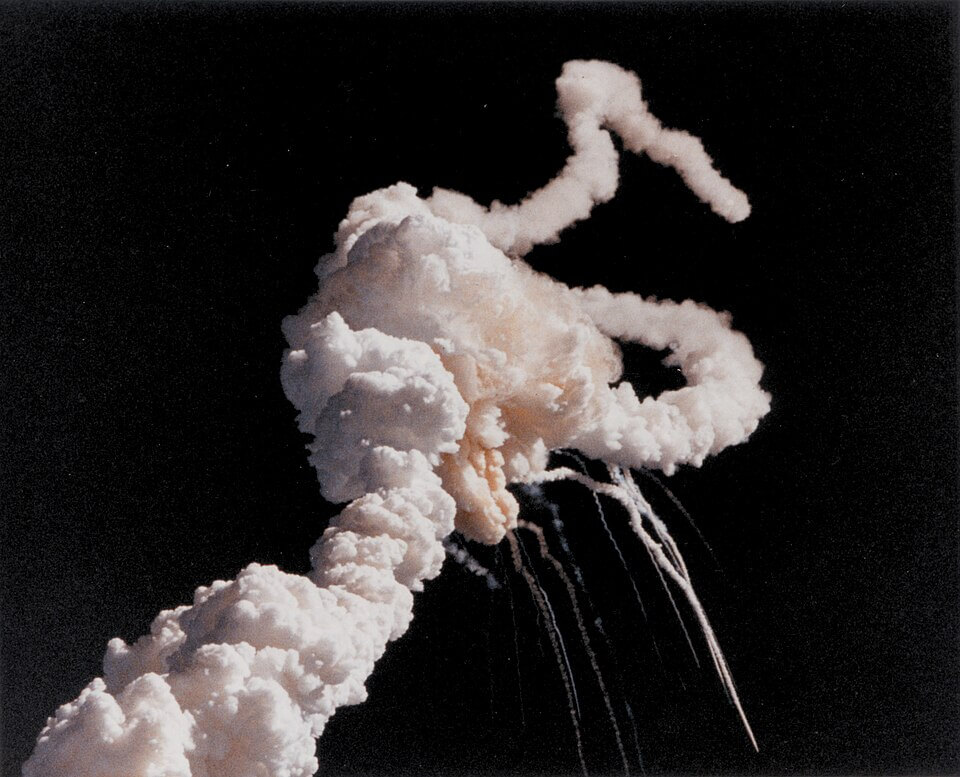
The Rogers Commission concluded that the primary cause of the disaster was the failure of O-ring seals in the right solid rocket booster. These rubber seals lost resilience due to unusually cold temperatures on the morning of launch, allowing hot gases to escape.
Apollo 11 Astronaut Reveals Spooky Secret About Mission To Far Side of The Moon!
Internal NASA memos later revealed that engineers had warned management about O-ring performance in cold conditions. Despite these warnings, the launch proceeded. Nobel Prize–winning physicist Richard Feynman famously demonstrated the flaw during the investigation, stating, “For a successful technology, reality must take precedence over public relations.”
Rather than a sudden explosion, Challenger was destroyed by extreme aerodynamic forces once the structural integrity of the external fuel tank was compromised. This distinction is critical to understanding what happened next.
The Shuttle Did Not Explode Instantly
NASA clarified that Challenger did not explode due to combustion. Instead, the vehicle was torn apart by aerodynamic stress at supersonic speed once its structural envelope failed.
High-speed film analysis and debris trajectory mapping showed that multiple components separated intact, including the crew cabin. This contradicted early media portrayals of total instantaneous destruction.
According to NASA’s official accident report, “The orbiter breakup was caused by aerodynamic forces, not an explosion.” This finding fundamentally changed how investigators assessed survivability during the event.
Separation and Survival of the Crew Cabin
The crew cabin detached from the rest of the shuttle and continued upward for approximately 25 seconds after vehicle breakup. During this time, it followed a ballistic arc similar to an unpowered spacecraft.
Structural analysis confirmed that the cabin remained largely intact until ocean impact. NASA engineers based this conclusion on debris patterns, metallurgical examinations, and underwater recovery data.
A NASA technical summary stated, “The crew module did not undergo structural breakup prior to water impact,” indicating it remained a closed environment during descent.
Evidence of Conscious Crew Members

One of the most significant findings involved the Personal Egress Air Packs. Of the four units recovered, three had been manually activated.
NASA flight surgeon Dr. Joseph Kerwin explained that activation required deliberate action and could not occur automatically. “This tells us that at least some crew members were alive and aware for a period after the breakup,” he stated.
While the air packs provided oxygen, they did not supply pressurization. Medical experts emphasized that oxygen alone would not prevent hypoxia at extreme altitude, meaning consciousness, if present, would have been limited in duration.
Medical Findings and Limitations
NASA conducted medical examinations with strict confidentiality and restraint. The severity of the final impact made it impossible to determine precise causes of death or timing for individual crew members.
Dr. Kerwin noted in his report that injuries from impact were “not survivable,” and that evidence of pre-impact trauma was obscured by the destructive forces involved.
NASA officially concluded that death occurred at ocean impact, though it acknowledged uncertainty regarding the exact moment when consciousness was lost.
The Final Descent and Ocean Impact
After reaching its apex, the crew cabin fell nearly three minutes into the Atlantic Ocean. Calculations estimated impact velocity at over 200 miles per hour.
The deceleration forces upon impact were far beyond human tolerance. Even with structural integrity, no known materials or safety systems at the time could have mitigated such forces.
NASA engineers stated unequivocally that survival was impossible at impact, regardless of cabin condition.
Recovery Operations and Findings
It took approximately five weeks to locate the crew cabin, which rested 18 miles offshore at a depth of about 100 feet. Recovery efforts were conducted with extreme care and secrecy.
The U.S. Navy and NASA worked together to retrieve debris while minimizing public exposure. The condition of the cabin confirmed impact-related destruction rather than mid-air breakup.
NASA emphasized respect for the astronauts’ families, limiting public disclosure of sensitive findings while releasing essential technical conclusions.
Why the Full Story Was Softened
NASA officials later acknowledged that certain details were not emphasized publicly to avoid additional trauma during a time of national mourning. The visual footage alone had already left a deep psychological impact.
The agency chose to focus on engineering lessons and systemic reform rather than the human experience during the final moments. This decision was later debated but understood within the emotional context of the disaster.
Challenger ultimately reshaped NASA’s safety culture, launch authority procedures, and risk assessment models.
Conclusion
Mainstream scientific evidence confirms that the Challenger disaster was not an instantaneous fatal event. The crew cabin remained intact, some astronauts were likely conscious briefly, and death occurred upon catastrophic ocean impact.
These conclusions come directly from NASA investigations, medical expertise, and engineering analysis—not speculation. The reality is more complex, more sobering, and more human than the simplified version long repeated.
Remembering Challenger means acknowledging the full truth, honouring the crew not only for their mission, but for the lessons their sacrifice forced the world to confront.