
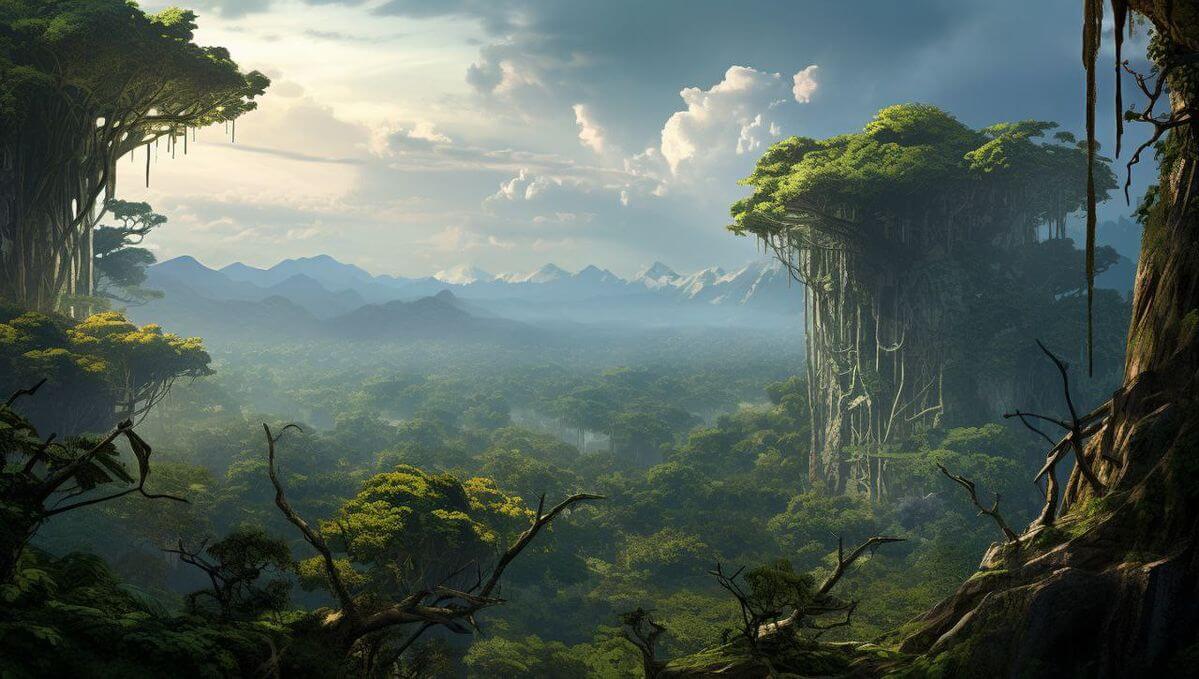
Researchers Found A Lost Rainforest Buried Beneath Antarctica
Researchers have uncovered evidence of a lost rainforest buried deep beneath Antarctica’s ice. The discovery is reshaping what we know about Earth’s ancient climate and the continent’s hidden past.

Antarctica is often described as a frozen, lifeless desert at the edge of the world. Yet beneath nearly two miles of ice, scientists have uncovered evidence that completely overturns that image. Hidden below the Antarctic Ice Sheet are the remains of a lost rainforest — proof that this polar continent was once warm, green, and biologically rich.
Deep sediment cores extracted from West Antarctica revealed fossilized roots, pollen grains, and intact soil structures formed in a humid, forested environment. These materials date back roughly 90 million years to the Cretaceous period, when global temperatures were far higher and sea levels dramatically different from today.
The implications are profound. Antarctica was not always locked in ice. It once supported dense vegetation near the South Pole, surviving months of seasonal darkness. This forces scientists to rethink long-standing climate models and the limits of life in extreme environments.
And the rainforest is only one layer of the story. Beneath the ice lie ancient landscapes, tectonic records, and active geological systems that suggest Antarctica remains one of Earth’s most complex and scientifically critical regions.
The Discovery Beneath the Ice

The breakthrough began with an international drilling mission targeting sediment layers buried beneath the West Antarctic Ice Sheet. Researchers recovered a core containing preserved plant matter and a distinct soil horizon — something that can only form through long-term forest growth in stable, temperate conditions.
The Mystery of Atlantis: The Truth About The Lost Civilization You Were Never Told
Microscopic analysis revealed diverse pollen species and root networks embedded in the sediment. The concentration and preservation of organic material indicated sustained rainfall, mild temperatures, and a functioning ecosystem rather than scattered vegetation.
This was not a brief warming event. The evidence pointed to a fully established rainforest system that existed for extended geological periods. Antarctica was not marginally warmer — it was dramatically different from the frozen continent we know today.
Antarctica’s Ancient Greenhouse Climate
During the mid-Cretaceous, atmospheric carbon dioxide levels were several times higher than modern concentrations. Climate simulations aligned with the sediment data show that Polar Regions experienced average temperatures comparable to present-day temperate zones.
Despite months of winter darkness, forests adapted and flourished. This suggests that ancient plant life evolved mechanisms to survive extreme seasonal light cycles while benefiting from sustained warmth and humidity.
The discovery provides critical insight into how greenhouse climates operate over long time scales. It demonstrates that when carbon dioxide rises significantly, even polar continents can transform into forested environments.
Subglacial Landscapes Frozen in Time
Radar imaging and satellite mapping have revealed vast valleys, river channels, and mountain systems preserved beneath kilometres of ice. Some of these landscapes have remained isolated from the surface for more than 30 million years.
These hidden terrains show clear signs of ancient water flow, erosion patterns, and vegetated surfaces that existed before Antarctica’s deep freeze. Their preservation creates a rare geological archive, locked away from erosion and human interference.
Studying these buried worlds allows scientists to reconstruct entire ecosystems and climate transitions with remarkable precision.
Volcanic Systems Beneath the Ice Sheet
Antarctica is also geologically active. Surveys have identified dozens of subglacial volcanoes, particularly beneath West Antarctica. These systems generate geothermal heat that can weaken ice from below.
Basal melting caused by volcanic heat influences glacier movement and may accelerate ice sheet instability in certain regions. This adds another layer of complexity to Antarctica’s climate system.
The interaction between ancient landscapes, geothermal energy, and thick ice sheets makes Antarctica far more dynamic than once assumed.
Fossil Records and Prehistoric Biodiversity
The rainforest evidence connects with broader fossil discoveries across the continent. Marine reptiles, plant fossils, and sedimentary records confirm Antarctica was once part of Gondwana, linked to South America, Africa, and Australia.
These fossils reveal ecosystems that were diverse and ecologically balanced. The continent supported plant life, freshwater systems, and complex food chains long before ice dominated the region.
Understanding this biodiversity helps scientists trace how life responded to shifting continents and changing climates.
What the Evidence Suggests About Earth’s Climate Future
The Antarctic rainforest discovery is not just about ancient history — it carries modern relevance. It demonstrates the scale at which global warming can reshape entire continents over geological time.
Key scientific observations include:
- Sustained high atmospheric CO2 can eliminate polar ice entirely
- Forest ecosystems can develop in regions once considered permanently frozen
- Climate transitions can permanently alter continental landscapes
- Polar regions are highly sensitive to greenhouse gas increases
These findings strengthen climate modelling and highlight the long-term consequences of atmospheric change.
Ongoing Expeditions and Technological Advances
Modern research teams are deploying advanced ice-penetrating radar, deep drilling platforms, and satellite imaging systems to explore untouched regions beneath East Antarctica.
Each expedition refines our understanding of the continent’s geological layers and prehistoric ecosystems. As technology improves, scientists can access deeper sediment records than ever before.
Antarctica’s ice still hides vast unexplored areas. What has already been uncovered suggests that far more discoveries remain ahead.
Antarctica as Earth’s Climate Archive
More than any other continent, Antarctica preserves a continuous record of planetary transformation. Beneath its frozen surface lies a timeline of greenhouse periods, tectonic shifts, extinction events, and climate transitions.
The lost rainforest is not an isolated anomaly. It is part of a broader story showing how dramatically Earth can change under shifting atmospheric conditions.
Antarctica is not simply a frozen desert — it is a climate archive, a geological vault, and one of the most important scientific frontiers on the planet.
Conclusion
The discovery of a lost rainforest beneath Antarctica fundamentally changes how we view the continent and Earth’s climate history. What is now the coldest place on the planet was once covered in dense vegetation and thriving ecosystems. As researchers continue drilling deeper and mapping hidden subglacial landscapes, Antarctica is revealing itself as a dynamic and evolving continent rather than a static block of ice. Its buried forests serve as powerful evidence that Earth’s climate can transform on a massive scale — and that the frozen south still holds answers we are only beginning to uncover.
 Watch This:
Could Antarctica ever become green again?