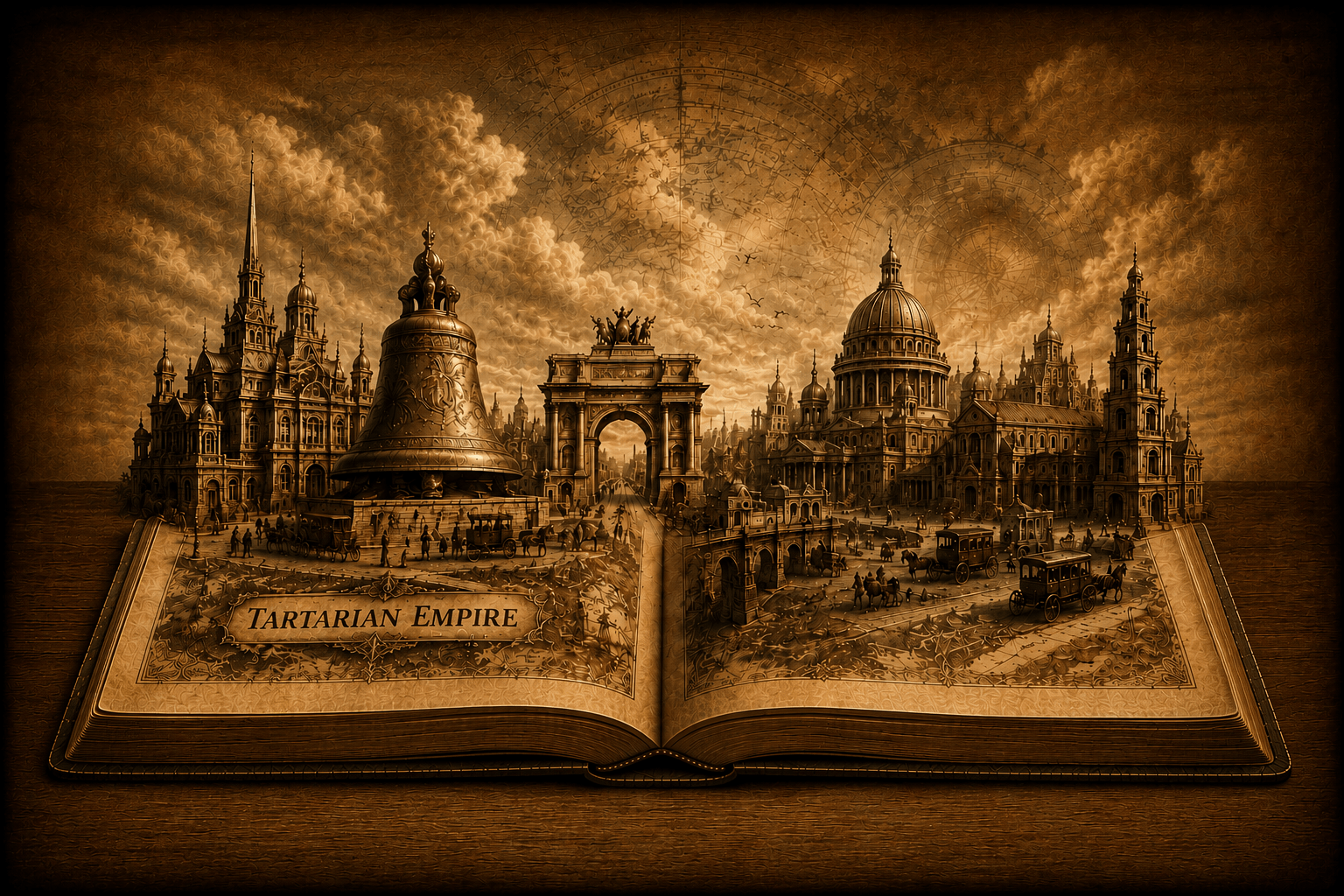
The call came in the middle of the night, the way these things always seem to.
On the other end was a source who claimed to have spent decades inside rooms most people don’t know exist.
However, what they described wasn’t one encounter. It wasn’t even one species.
It was twelve.
Twelve distinct forms, twelve separate patterns of contact, twelve pieces of a puzzle that governments have allegedly tried to keep scattered for generations.
And then came the warning.
Not about disclosure. Not about press conferences or congressional hearings.
About timing.
A moment, the source said, was approaching—a convergence point where secrecy would no longer be an option.
For years, investigative reporter Linda Moulton Howe has built a career on exactly these kinds of claims, chasing testimony that mainstream media routinely dismisses and that whistleblowers insist is real.
She doesn’t claim to have all the answers.
Instead, she claims to have the documents. The interviews. The decades of paper trail that keep pointing toward the same uncomfortable conclusion.
That we are not, and have never been, alone.
What follows is not a single sighting or a single story.
It’s an attempt to map something far larger—a taxonomy of the unknown, built from testimony that spans continents, decades, and levels of government clearance most of us will never see.
Some of it will sound familiar. Some of it will not.
All of it, according to the people who lived it, is only the beginning.
The Twelve Types Hidden in Decades of Testimony
Howe’s approach has never been to entertain. It has been to catalo.
Over the course of her career, she has interviewed physicists, military officers, intelligence analysts, and private citizens who each, independently, described encounters that seemed to align along recognizable lines.
Notably, these were not identical stories, nor rehearsed talking points.
UFO Disclosure: Are Alien Species Secretly Influencing Humanity behind the Scenes?
But patterns—the kind that emerge only when enough data points accumulate over enough years.
The most frequently referenced classification breaks contact accounts into distinct types, each with its own physiology, behaviour, and alleged agenda.
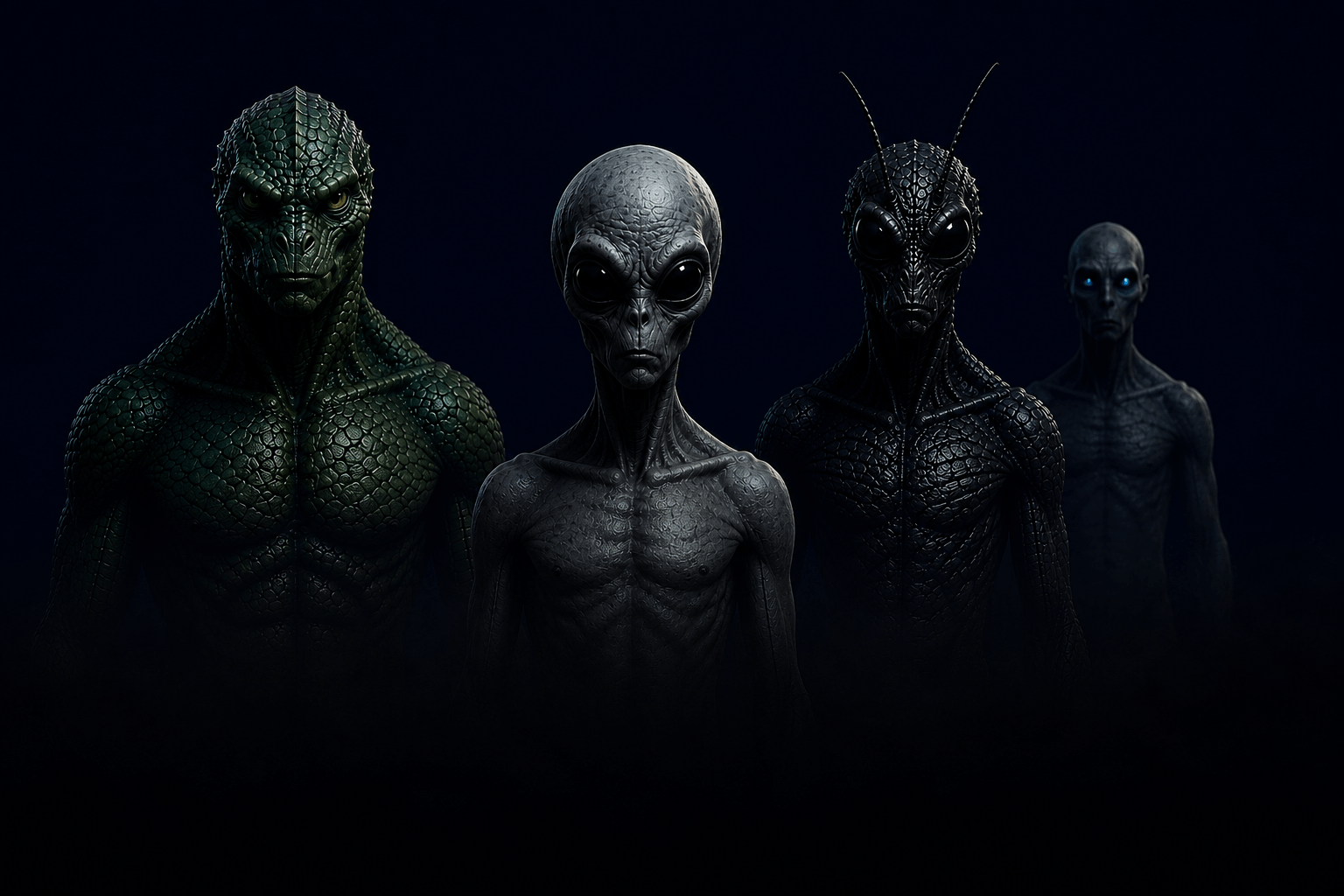
For example, the small, large-eyed beings often described in abduction testimony represent only one branch of a much larger tree.
Others described are taller, more humanoid, sometimes reported as almost indistinguishable from us at a glance—until they aren’t.
Then there are accounts of beings whose descriptions lean reptilian, a category that draws immediate scepticism, and yet appears with striking consistency across unconnected testimonies from different decades.
Meanwhile, insectoid forms appear less frequently but no less vividly, described by witnesses as unsettling not because of hostility, but because of an alien logic that seems to govern their movements.
What makes Howe’s work different from tabloid coverage is the sourcing. Retired military personnel. Contractors. People who, in several cases, only came forward once they believed their silence had outlived its purpose.
She has long argued that these categories are not fictional constructs, but working classifications used inside compartmented programs—labels assigned not for entertainment, but for operational clarity.
Even so, whether or not that claim can be verified through public records remains, as it has for decades, a matter fiercely contested.
But the consistency of the reports is what keeps investigators returning to the subject, year after year, testimony after testimony.
Why Were They Really Here — And What Did They Want?

If these encounters are real, the question that follows every single one is the same: why here, why now, why us.
Some testimonies describe an almost clinical curiosity—observation without interference, study without contact.
In contrast, others describe something closer to concern, as if whatever is watching has a stake in what happens next on this planet.
And a smaller, more unsettling category describes something closer to competition—multiple non-human intelligences allegedly aware of each other, and not necessarily aligned.
This is where Howe’s reporting takes its sharpest turn.
She has repeatedly suggested that Earth may not be dealing with a single visiting civilization, but several—each with different priorities, different levels of interaction, and potentially different relationships with human governments.
If true, that reframes the entire conversation.
Therefore, it’s no longer a question of whether we’ve made contact.
It becomes a question of which faction we’ve made contact with, and what has already been agreed to on our behalf.
Some sources describe technology exchange programs. Others describe biological monitoring, stretching back generations, quietly folded into medical and agricultural anomalies that rarely make headlines.
And a few—the most difficult to verify, and the most difficult to dismiss—describe something closer to a countdown.
Rather, it’s not an invasion, not in the way science fiction has trained us to imagine one.
Something slower. Something already in motion.
Final Verdict: The Countdown May Already Have Begun
Every investigator who has spent enough time in this field eventually runs into the same wall.
Rather, it’s a lack of proof that satisfies everyone at once.
Howe has spent decades pushing against that wall, gathering testimony that individually proves nothing, but collectively becomes difficult to wave away.
And now, according to her most recent reporting, that decades-long standoff may be approaching a breaking point.
The language used by her sources isn’t dramatic for the sake of drama. It’s specific.
A convergence. A moment when the systems built to contain this information can no longer hold.
Why the Old Containment Systems May Finally Be Failing
For instance, some of that pressure, according to insiders, comes from technological limits—sensor networks, satellite coverage, and civilian smartphone footage making concealment logistically harder than it was fifty years ago.
Additionally, some of it, they claim, comes from the visitors themselves—a shift in behaviour, frequency, or visibility that suggests the era of quiet observation may be ending.
And some of it, more unsettlingly, comes from within. Whistleblowers aging out of their non-disclosure obligations. Deathbed confessions. Documents surfacing not through leaks, but through simple bureaucratic decay.
Consider what’s been reported so far:
- Multiple independent sources describing the same twelve-category framework without apparent coordination
- A pattern of increased military encounters logged and later declassified in partial form
- Testimony suggesting compartmented programs are aware of each other’s existence, even when the public isn’t
- Recurring references to a “threshold event” tied not to alien intent, but to human readiness
None of it constitutes proof in a courtroom sense.
All of it constitutes a pattern that refuses to disappear.
Whether the moment Howe’s sources describe arrives as revelation, confrontation, or simply another quiet escalation nobody notices until years later, one thing seems certain to those who’ve spent their careers chasing this story.
The silence was never going to last forever.
Howe has spent the better part of five decades building the archive for exactly this moment—case files, testimonies, and documents collected long before anyone else thought to ask the questions.
It was only ever a matter of when the rest of the world would catch up to what she’d already been documenting.