


For more than four thousand years, a stone guardian has stared east across the Giza desert.
It never blinks. It never speaks. And it may not even be wearing its original face.
Researchers still argue over who built it, when, and why.
Now a strange theory is spreading. It claims the Book of Enoch explains what the Sphinx was built to guard.
And why, the theory adds, someone changed its face.
The video further down this page holds footage so mind-bending that you may never see the Sphinx the same way again. But first, you need to see why so many believe the Sphinx hides something.
Because the clues, at first glance, are hard to ignore.
The Face They Never Wanted You to Question

Look closely at the Sphinx, and something feels off.
Mount Kailash: The Sacred Peak No One Has Ever Climbed
The head is small, almost modest, beside the enormous lion’s body.
Some suggest it began as a ram’s or hawk’s head, recut into a human face.
Most Egyptologists say the face is Khafre’s. Yet no inscription names him.
Even the date is disputed. Robert Schoch and John Anthony West claimed water erosion points to 7,000 to 10,000 years.
The Sphinx has also lost its nose, its beard and most of its red paint.
So could the Sphinx have been altered to hide its true identity?
The Chambers Nobody Is Allowed to Open

In the early 1990s, West’s team reported strange seismic readings near the Sphinx.
They suggested hollow chambers a few metres down, between the paws and along the sides.
In 1995, workers found nearby tunnels. Recent scans claim to show what lies beneath the Sphinx.
Old legends speak of a lost Hall of Records below.
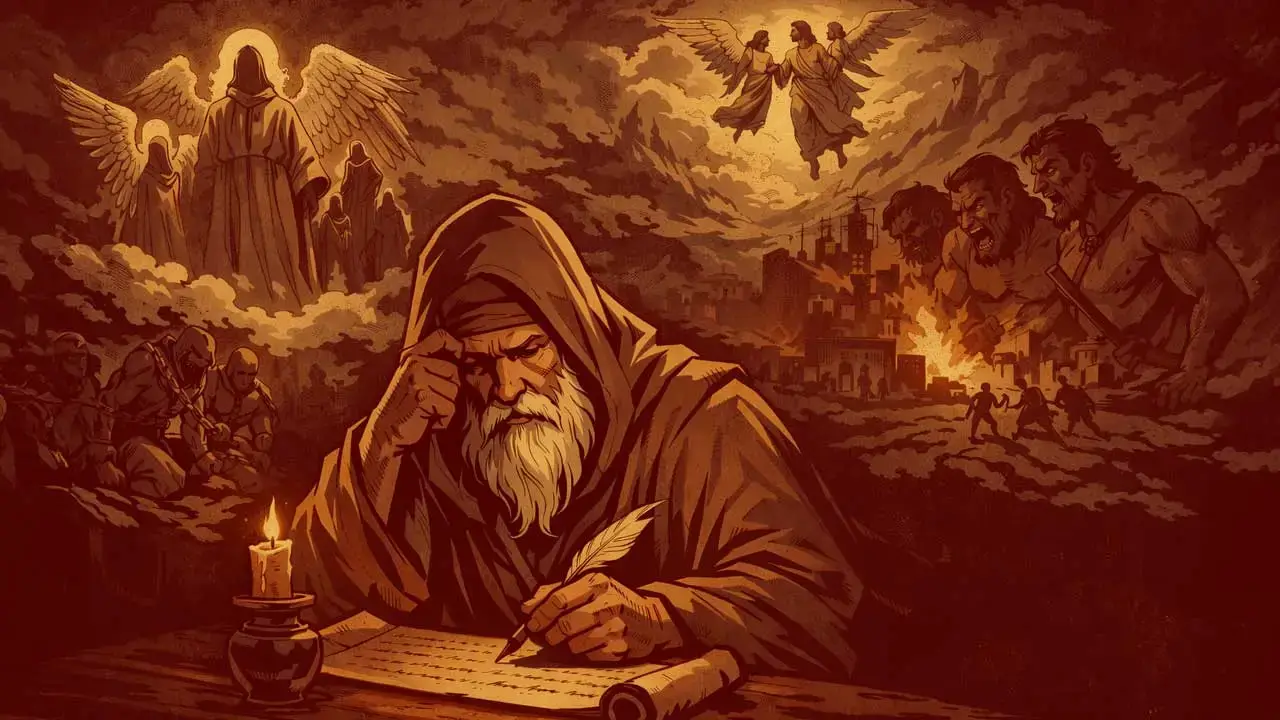
That is where the Book of Enoch enters. Its Watchers, fallen angels, taught humans forbidden knowledge. What if the Sphinx guards what they left?
The One Question Nobody Can Truly Answer
Here is where the legend meets the evidence.
First, the Book of Enoch never mentions the Sphinx. Its earliest parts date to the third century BC, over two thousand years later.
Meanwhile, most Egyptologists date the Sphinx to Khafre’s reign, and the recarving idea has never been proved.
Likewise, no hidden room has been confirmed. The readings could be natural.
Even the missing nose points to deliberate defacing in later centuries.
So what is the Sphinx really guarding? Perhaps just the oldest question of all: who built it, and when?
 Watch the Video
Do you think the Sphinx is guarding a hidden secret, or is it simply the oldest riddle in Egypt?